Category: Materialization technologies
"AI SLOP": Why We Can't Stop Watching Talking Apes With Fake Faces
It’s a lazy Sunday morning. Hot toast, a fresh cup of coffee, and great weather outside — the perfect time to go for a walk. You open your phone, scroll through your feed, and suddenly, a short AI-generated video catches your eye. Next thing you know, the coffee is stone cold, the toast is a sad, forgotten relic, and your plans for the day have vanished into thin air. At first, it’s funny. Then it hits you: you’ve just spent hours watching this stuff. How is it so hard to look away?
Why do people watch videos that are completely absurd and utterly pointless? A talking, dancing cucumber. A granny from a crumbling Soviet-era shack walking a snake — then a hippo — on a leash. A resurrected Kurt Cobain running from the cops. A wolf performing a scene from a play. And that’s just the tip of the iceberg.
The characters are bizarre, the plots are ridiculous and mostly illogical, and there’s not much of a point to any of it. So why do these clips rack up millions of views and likes? Why do people share these AI-generated “masterpieces” with their friends, genuinely thinking they’re hilarious and fascinating?
Not so long ago, making a video required real effort. You needed an idea, a script, proper lighting, a camera, dozens of takes, and hours of editing — all while knowing your audience might not even care. Today, you don’t need any special skills to create viral content. Anyone can generate an AI production, and that’s why they’re multiplying at an insane rate.
Which begs the question: are we moving forward, or slowly rotting?
Technology is undeniably a good thing. It opens up new possibilities for creativity and learning. But lately, you keep hearing the term “brainrot” — a flood of weird, meaningless videos designed to overload your attention and keep you glued to the screen for as long as possible.
If AI content feels so pointless, why do we keep watching it? Maybe the problem isn’t the technology itself, but us. To figure out whether AI videos are progress or a step toward degradation, we need to look at the issue from different angles.
Say “Cut” to Long Films: Welcome to the Age of AI Slop
First, let’s clarify what “AI slop” actually means. The term is popping up all over the internet, and it refers to low-quality, mass-produced content generated by artificial intelligence — stuff with no real meaning or artistic value, designed purely for clickbait. In online communities, you’ll also hear synonyms like “digital garbage” or “artificial mediocrity.”
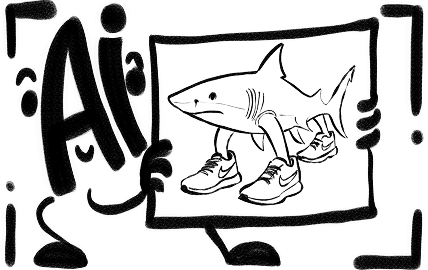
This category includes videos, images, and posts churned out in huge quantities by neural networks and spread across various platforms. There’s nothing deep or philosophical about them. It’s just a blunt attempt to grab the user’s attention here and now. The absurdity of it all looks bright and intriguing, which is precisely why these media products stand out in an endless feed.
One More Video and Then Bed!
Understanding the term isn’t enough. The real secrets lie much deeper: what’s the concrete reason for this mass capture of our attention?
The human brain is naturally drawn to the strange and unusual. Any disruption to a familiar pattern — unexpected twists, sudden changes, bizarre images — immediately grabs our focus. AI videos, by creating a sense of absurdity, work exactly that way, which is why they hold the viewer’s interest. Simply put, they focus on something that can’t be explained right away.
Short videos work like a pleasure button: dopamine keeps dripping nonstop, with zero effort required. It’s no wonder the brain quickly learns to demand this fix over and over again.
Clip thinking isn’t an insult — it’s a diagnosis. The brain has been trained to switch channels every fifteen seconds. Now, focusing on anything for longer than that feels like a heroic feat. And the illusion of free choice? That’s just algorithms leading us by the nose, feeding us exactly what will keep us from looking away.
The most obvious reason we watch generated videos is probably an attempt to escape reality. There’s constant informational pressure from all sides — endless stress and tension that batter our nervous system. By evening, we’re so drained that we can’t handle serious content. A TV series demands attention. A film requires immersion. But a short video? You just swallow it, and suddenly it feels like you’ve rested. AI offers an easy dose of escapism — the illusion that we’ve switched gears, when in fact we’ve just filled our heads with even more noise.
And so a vicious circle forms: curiosity, a quick dopamine reward, an escape from reality in search of rest, and then curiosity again. It’s all this that pulls us toward AI content, keeping our eyes glued to absurd and nonsensical things.
1902 vs. 2026: Who’s Rewatching Who?
If we want to dig deeper, we need to go back — to the late 19th and early 20th centuries — and look at the birth of visual content: the very first cinema. Back then, audiences reacted to those strange moving pictures in much the same way.
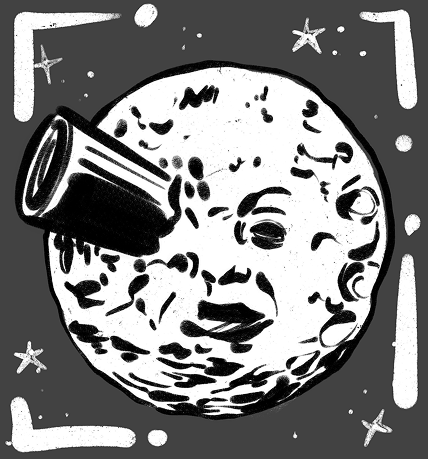
The Lumière brothers’ first film ran less than a minute and showed workers simply leaving a factory. No plot, no editing, no drama. Yet people were mesmerized and watched it ten times over. Their brains weren’t spoiled by rapid cuts and flashy edits. Simple motion was enough to shock them. Viewers in the theater actually flinched when a train appeared to come straight at them from the screen — forty-eight seconds of black-and-white film. Georges Méliès’s A Trip to the Moon — the pride of 1902 — lasted only fourteen minutes but sent audiences into shock as a rocket flew straight toward the camera. Today, we’d laugh at the jump cuts, the obvious set changes, and the handcrafted effects. There were no CGI or special effects back then. But that didn’t stop the film from becoming a milestone in cinema history.
The language of film as we know it hadn’t been formed yet. Audiences had to figure out how to perceive moving pictures all on their own. Gradually, cinema developed its own set of rules — plot, script, shooting, editing, special effects, musical scores — that today have become second nature to anyone creating content.
Isn’t the same thing happening now with AI-generated content? We often look at it with skepticism. Maybe that’s because we’re standing at the starting line of a new visual language, still in its infancy. If that’s the case, maybe our perception just needs time to adapt.
Here’s the catch: modern cinema is getting longer and longer, more complex and dense. It seems contradictory. If people are finding it harder to focus on long content, why do directors keep making movies that run for three hours? One possible answer is the accelerated pace of modern filmmaking — rapid scene changes, countless special effects, and constantly evolving plotlines. Plus, watching a movie is a conscious act, unlike the mindless scrolling through a social media feed.
Trash or Art?
So our perception depends heavily on format and context. But where, then, is the line between art and digital garbage?
Art is a flexible thing. Once upon a time, photography wasn’t considered art. Now, it is. And in a couple of decades, your grandson will be discussing the “narrative practices of neural network-generated video” with a straight face, arguing with you about whether it counts as art.
Right now, the most popular opinion among critics is that AI content feels shallow. These videos are churned out in massive quantities, carrying no artistic value or carefully crafted script. But maybe that’s only for now.
There’s also a fear that AI content devalues the creative process itself. An image generated in a minute seems to erase all the effort and intention behind an artist’s work. Many people who share this view believe that a true work of art always carries a piece of its creator’s soul — and that AI content is, by definition, soulless, which proves it can’t be art.
AI advocates find this perspective far too harsh. They remind us that every new technology was initially dismissed as “frivolous” — until it eventually became part of the artistic landscape.
From this side, AI content can be seen as a new tool for self-expression. Even absurd videos can provoke genuine emotion. What matters isn’t just how the content was made, but how the viewer experiences it.
There is no definitive answer yet to the question: “Is it art or not?” Most likely, the problem isn’t AI content itself. The problem lies in how we choose to use it.
The Unconscious Internet
The internet is no longer seen as a space of choice. Today, algorithms pick content based on your previous clicks and build a personalized feed — one that gets harder to escape every single time.
In this context, AI content becomes part of the “unconscious internet.” The Swiss psychologist and psychiatrist Carl Jung once wrote about the collective unconscious — shared images and reactions that influence our perception of the world. The internet is starting to work the same way. We consume content mindlessly, on autopilot, on the level of pure habit.
Watching videos has become a background activity, something we do just to fill a pause. The result? Our attention scatters, and the line between conscious and unconscious blurs.
AI content is perfect for this system. It’s fast to produce, easy to adapt, fits seamlessly into the algorithm, and tailors itself to the user’s interests. This creates an endless loop: content and algorithms feed into each other, exerting stronger and stronger influence with each cycle, while the human being sits right at the epicenter of this infinite stream.
A Short Answer to a Long Question
It’s obvious: there’s no escaping AI now. The volume of AI slop is only going to grow. Technology keeps advancing, creation tools become more accessible, and more people will be able to produce videos, images, and text.
Most likely, this content will become more realistic, and algorithms will learn to adapt to users’ interests even more precisely. The line between what’s made by a neural network and what’s made by a human will blur — or disappear altogether. Staying conscious in an endless stream will become even harder.
That said, both will continue to coexist. Fast, easy content will remain, helping us rest and zone out. More complex content will serve those who want to engage thoughtfully.
So which is it — degradation or progress? Probably neither on its own. Artificial intelligence is just a hammer. Whether you use it to drive a nail or smash your own skull — that’s up to you.
The problem isn’t the videos of dancing fruit. The problem is that we let algorithms hypnotize us and choose for us. Whether it’s garbage or art — time will tell, most likely. But what matters is remembering that we have a choice: let ourselves be strangled by the dopamine noose, or surrender to real life.
And the moment that choice stops being unconscious — maybe then, we’ll take a step toward genuine progress.
The cell divides into the nucleus and cytoplasm. Our journal divides into interesting facts and discoveries.
Thank you!