Category: Cognitive technologies
The Evolution of Education
“Education is the most powerful weapon which you can use to change the world”
Nelson Mandela
At what age did you read your first book? When did you sign your first homemade card for your mother? And how long did it take you to learn to count to a hundred? Today, these skills seem simple and accessible. Increasingly, young people, following the example of successful figures, are rejecting higher education, limiting themselves to developing soft skills and the ability to adapt to a rapidly changing reality.
Yet, just a century and a half ago, only 25% of men and fewer than 10% of women on the planet could read. And what about even earlier? Fasten your seatbelts — we’re setting off on a journey to find out how and what people have learned over the last 10,000 years.
Ancient Societies
If you think today’s teachers are too strict and demanding, try to imagine having to memorize Vedic hymns or Homer’s Odyssey by heart. And if you made a mistake, you’d be beaten with a stick and sent to sleep under the stars — so your memory would be stronger.
While writing was still spreading across the world, all learning was built on rote memorization of myths, songs, legends, and ritual formulas.
A student — no matter how influential or wealthy their parents — was entirely subordinate to the teacher. During lessons, they would repeat movements, words, and actions until they achieved perfect conformity. The rest of the time, they carried out all the teacher’s orders, demands, and whims. For example, Mesopotamian schools were called Edubba — “The House of Tablets.” Teachers there demanded that students spend years copying and memorizing lists of cuneiform signs until their hands trembled and their memory began to fail. But knowledge was considered a divine gift, and no price for it was seen as too high.
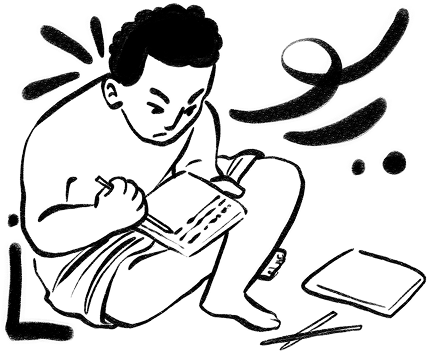
From Mesopotamia to China, boys from affluent and educated families were sent to learn the secrets of cuneiform and calligraphy, literature, mathematics, astronomy, and philosophy.
True education was the preserve of the upper classes. To get it, you had to win the lottery at birth. Or at least be born into a craftsman’s family and receive your father’s trade secrets.
Education was built on the principle that knowledge is sacred — it cannot be distorted, and certainly not invented anew. Every mistake was considered an insult to the divine gift: the world was already created, the laws already written, the truths already revealed. The task of education in that era was to preserve knowledge intact and pass it on to the next generation.
Antiquity
The ancient Greeks were the first to consider the simple transmission of skills insufficient and seriously contemplated the formation of personality during the learning process. In the Greek city-states, education became a privilege of free citizens and was meant to prepare them for public life.
Philosophers founded schools where teaching methods and curricula were developed. The mandatory subjects at that time were: rhetoric, ethics, and logic.
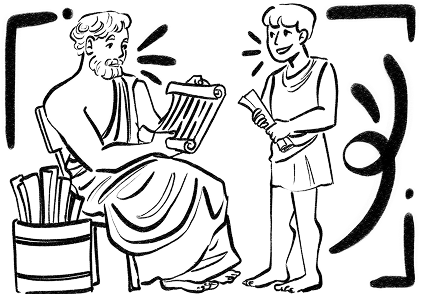
For the first time in history, education was divided into two levels: general education for boys from the age of seven, where they were taught the essentials — reading, writing, music, poetry, gymnastics; and specialized education for youths from the age of sixteen, where they studied philosophy, mathematics, medicine, architecture, or military craft.
The main teaching method became dialogue. Through debate, the student acquired critical thinking skills, learned to discover truth on their own, received moral education, gained the important ability to defend their opinion, and developed a civic position.
Education was built on dialogue and independent thought. Truth was no longer fixed — it was born in dispute. The student no longer had to mindlessly repeat after the teacher; they asked questions, doubted, and proved. The task of education in that era was to cultivate a worthy citizen, capable of participating in the life of the polis, speaking before the people, and distinguishing good from evil.
The Middle Ages
The formal schools of Ancient Greece provided a successful foundation for education and persisted until the fall of the Western Roman Empire. Gradually, the initiative for education in Europe was taken over by the Church.
The main goal of education in the Middle Ages became the comprehension of divine truth. The centers of learning shifted behind monastery walls, where ancient texts were preserved and copied. But they were pushed from the pedestal of primary sources of wisdom by the sources of absolute truth: the Bible, the works of the Church Fathers, the teachings of Aristotle, and canon law.
Monastic schools were again divided into two types. Internal schools taught boys preparing for monastic life — Latin, theology, church singing, and the copying of books. External schools taught the children of laypeople reading, writing, arithmetic, and the basics of religion.
The main principle of learning was memorization and interpretation — without research, experiments, or observations, since truth was already given in the sacred texts. The student was required to understand it, explain it correctly, and, using strict logic, prove it in debate.
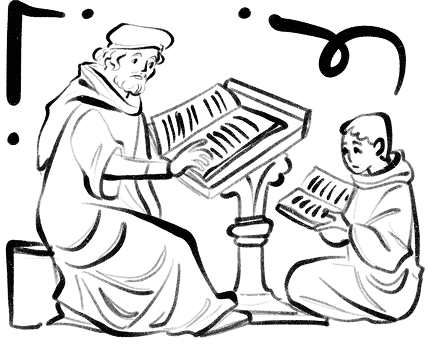
In an attempt to reconcile faith and reason, with the approval of the papacy and kings, the first universities began to appear in Europe. They were granted the right to have their own statutes and courts, and were even permitted to award academic degrees.
Young men — and only young men — were offered the study of the seven liberal arts (grammar, rhetoric, dialectic, arithmetic, geometry, astronomy, music) at the preparatory faculty, after which they could move on to theology, law, or medicine.
The education of that time was built on memorization and the correct interpretation of sacred texts. Research, experiments, and observations were considered heresy, because truth was already given in the Bible, the works of the Church Fathers, the teachings of Aristotle, and canon law. Once again, obedience was demanded of the student — without any liberties.
The Renaissance
And yet, the reconciliation of reason and faith did not happen. In the Renaissance, religious dogmas were thrown overboard by the champions of humanist ideas.
The goal of educating a well-rounded, fully developed personality pushed religious preparation into the background. It turned out that man is a creative being, capable of self-improvement. Moreover, this ability does not depend on origin — or even gender.
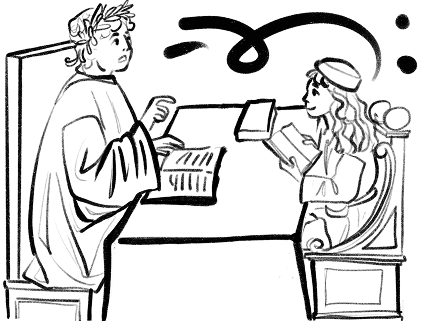
Education ceased to be the privilege of the aristocracy and clergy. Humanist schools accepted children from different social classes, but that was not enough: they dared to open private boarding schools and, with remarkable boldness, schools for girls attached to monasteries. To make knowledge more accessible, instruction was conducted in the national languages.
A striking example is Vittorino da Feltre’s “House of Joy.” In 1423 in Mantua, the humanist educator founded a school with the telling name — Casa Giocosa (House of Joy). A spacious, bright building decorated with frescoes of children’s games, it was located in the heart of nature and bore no resemblance to the gloomy medieval classrooms.
Vittorino was one of the first in Europe to renounce corporal punishment — the rod was permitted only for moral transgressions, never for academic mistakes. Fear gave way to interest: elements of play, visual aids, practical work in mathematics, and lessons conducted in a language the children could understand were all introduced into the curriculum.
Physical education was considered no less important than mental. Horseback riding, gymnastics, swimming, fencing — the students studied these disciplines in any weather, out in the fresh air.
An individual approach to each student became the guiding principle. Vittorino considered the abilities of every pupil, tailoring his methods to their unique characteristics rather than forcing everyone into a single mold.
At the “House of Joy,” the students included not only the children of aristocrats but also gifted boys from poor families — paid for by Vittorino himself. And, a true revolution for the 15th century, girls.
Education was built on a belief in the creative potential of man and the rejection of blind submission to dogma. Truth was once again to be discovered independently. Students were expected to think broadly, speak beautifully, and develop both body and character.
The task of education in that era was to cultivate a person, a citizen, and a creator — capable of living by their own mind and talent in a rapidly changing world.
The Enlightenment
A new era began, and with it came the belief that education could change society. Reason declared war on ignorance, superstition, and prejudice, armed with the scientific method.
Observation, experiment, and evidence became the three pillars of the new education. Attempts were made to gather and systematize all of humanity’s knowledge, in order to prepare, through education, not only scientists but also citizens capable of participating in the governance of the state.
Francis Bacon, as early as the 17th century, called for abandoning the “idols of the mind” — false authorities that prevent us from seeing the truth. John Locke argued that a child’s mind is a “blank slate” (tabula rasa) upon which experience writes knowledge. And Isaac Newton demonstrated how science works: observe, measure, test.
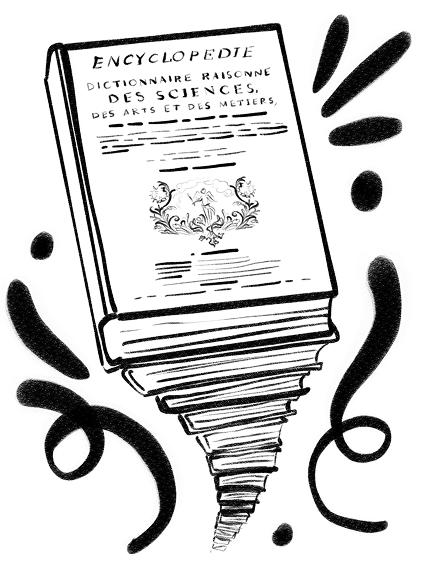
In 1751, Denis Diderot and Jean le Rond d’Alembert began publishing the Encyclopedia, or a Systematic Dictionary of the Sciences, Arts, and Crafts. In the end, over 30 years, 35 volumes were produced, with contributions from 183 authors — Voltaire, Montesquieu, Rousseau, Condillac. For the first time in the history of education, the authors described not only the “high” sciences but also the crafts: how to make looms, how to mint coins, how to build mills. Diderot personally visited workshops to understand how ordinary people worked.
Censorship persecuted the Encyclopedists. The first volume of the encyclopedia was seized immediately after publication; the Royal Council forbade its sale and distribution. D’Alembert eventually broke and left, but Diderot saw it through to the end.
New ideas entered pedagogy: Claude Helvétius argued that all people are born equal, and the differences between them are the result of upbringing. Denis Diderot, in his “Plan for a University” for Catherine the Great, stated bluntly: the goal of education is an honest person with a “true, beautiful, great, and good” taste. The teacher must be a professional and earn a good salary. And schools should be taken from the church and given to the state.
Jean-Jacques Rousseau went further. He declared that society corrupts the child. We must educate the “natural man” — free, moral, capable of thinking. His novel Émile, or On Education became the bible of the cult of childhood: the child should not exist for the system, but the system should exist for the child.
It was during the Enlightenment that state education systems began to take shape. Monarchs and philosophers furrowed their brows over the standardization of curricula, the creation of a network of primary and secondary schools, the training of teachers, and the level of state support. In Russia, Peter the Great and Catherine the Great opened educational institutions: the Academy of Sciences (1725), Moscow University (1755). Lomonosov, Novikov, Radishchev — all were children of the Enlightenment.
Education was built on observation, experiment, and evidence. Truth was no longer given in sacred texts; it was discovered through experience and verified by facts. The authority of the church and tradition no longer held power before the face of reason. Students could explore, doubt, test. An error became not a sin, but a part of the path to truth.
The task of education in that era was to equip a person with the scientific method, so that they could distinguish truth from lies, facts from prejudice, and participate in the governance of society as a free citizen.
The Industrial Era
Then, in the next century, the Industrial Revolution erupted and made its own adjustments to the development of education. Factories and plants did not need well-rounded, fully developed individuals. A good worker needed to be able to read instructions, follow a strict schedule, and perform routine tasks quickly and accurately — that was the entire modest list of requirements.
The industrial model of schooling introduced clear standards: the school day was divided into lessons; children were grouped by age into classes that studied subjects according to a uniform curriculum; grading systems, standardized textbooks, and systems of punishment were introduced.
The main goal was to instill habits of discipline, obedience, and teamwork.
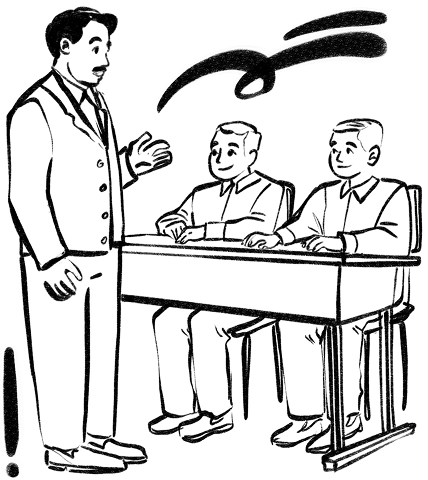
Industry demanded a large workforce. Under this pressure, states finally stepped toward progress and began to introduce compulsory primary education. “A literate worker is good,” the factories and plants nodded, “but give us skilled ones too.”
In response to this demand, the first technical schools, trade schools, and even women’s courses appeared.
Progressive educators tried to soften the emerging rigid system that equated school with factory, but the noise of production and its needs spoke louder.
Education must serve the economy. School and factory are united in their discipline and strict order. And the sum of knowledge should not exceed what is necessary to produce an obedient and punctual worker.
The 20th Century
Time put everything in its place and proved the rightness of the best minds of the Enlightenment. Universal education changed reality and gave rise to new social challenges. Now access to knowledge was open to all: women gained equal access to school and higher education; states began to take into account the cultural characteristics of minorities; and even workers acquired the opportunity to receive an education without leaving their jobs.
The voice of progressive educators grew louder, pushing the classical school model into the jaws of a crisis. Students and teachers felt cramped within rigid boundaries, and in response to new social and pedagogical demands, alternative approaches to education emerged.
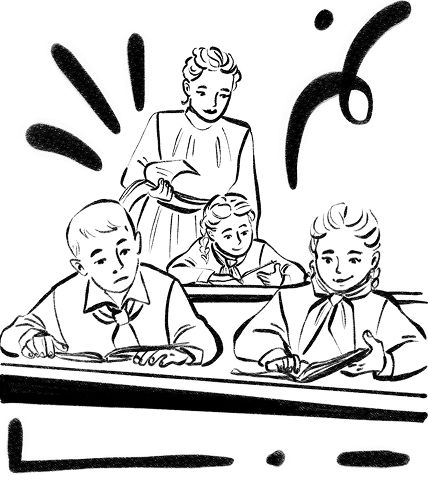
The Montessori Method, the Dalton Plan, and Project-Based Learning were aimed at creating a comfortable environment and fostering motivation through interest. The theories of Jean Piaget on the stages of a child’s intellectual development and of Lev Vygotsky on the importance of social interaction and the zone of proximal development played a crucial role in the development of these alternative approaches.
On the learning ring, two titans circled each other: school-as-factory and school-as-personality. It was only toward the end of the century that they reached a compromise — preserving the basic system while supplementing its content with the spiritual development of the individual.
Education in the 20th century was built on a belief in fundamental knowledge. Access to it was opened to all, but knowledge itself remained as solid as a rock. The basic system was retained, but supplemented with the spiritual development of the individual. The era demanded a fundamentally educated person with a coherent worldview.
The Information Age
Digital technologies have radically changed education: knowledge has become maximally accessible, and learning — flexible and personalized. The internet has destroyed geographical and financial barriers in education, granting access to open educational resources to anyone who wishes.
Knowledge has lost its permanence, and therefore education has shifted from a “once in a lifetime” category to a continuous process.
Education has extended the tentacles of its online format into virtual spaces, filling the minds of distance-learning students with materials from the world’s leading universities. People have gained the opportunity to learn not only from teachers but also from each other. Technologies adapt learning to the needs of each student: AI tutors, gamification, and data analytics are being integrated into the general framework.
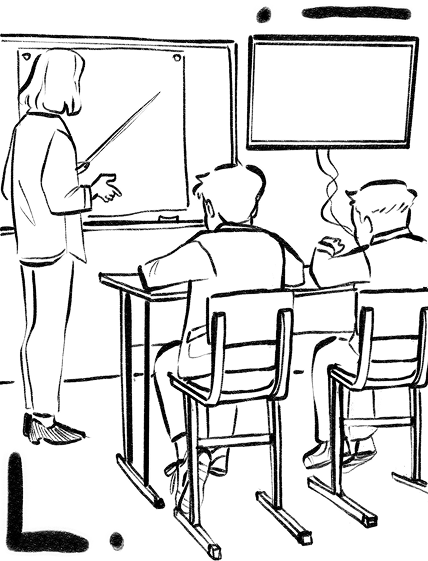
Contemporary education is undergoing a profound transformation. The traditional transmission of knowledge and the cultivation of moral qualities are retreating under the pressure of the need to adapt to a rapidly changing world and to develop the corresponding meta-skills.
The 21st Century
If you look at the entire evolution of education, you can notice a strange loop. In antiquity, knowledge was sacred, passed from teacher to student as a priceless gift. In classical antiquity, dialogue appeared — truth was born in dispute, and the student learned to think independently. The Middle Ages returned to obedience, but the Renaissance liberated the individual. The Enlightenment added the scientific method to that freedom.
The 20th century gave everyone access to education and bet on fundamental knowledge. The Information Age spread knowledge like water — it’s everywhere, but hard to hold onto.
But now we’re beginning to notice that an abundance of information does not make us wiser. We drown in data but suffocate from a lack of wisdom. We can find an answer to any question in seconds, but we’ve forgotten how to formulate a simple question.
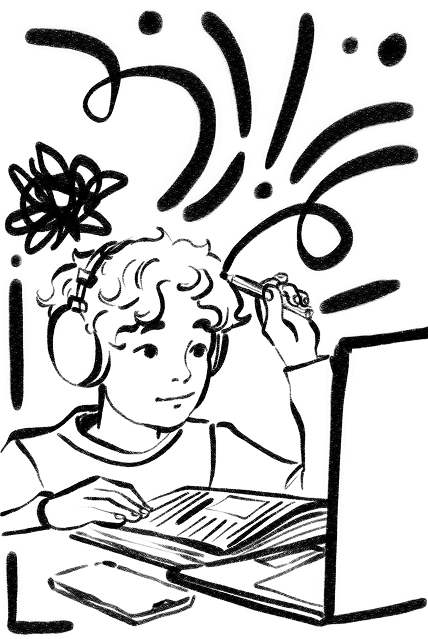
What if the next turn is a return to the sacredness of knowledge? Not in a religious sense, but in the sense of its value. Perhaps we will again begin to teach not “everything under the sun,” but what is most important. Perhaps we will understand that a student needs not a stream of facts, but a Teacher with a capital T — someone to show the way. What if we return to where we began: knowledge is sacred, and it must be passed on carefully — not dumped by the ton?
The education of the future may not be a choice between “knowledge” and “skills,” but it will certainly be a choice between meaning and noise.
AI will take on the routine: selecting materials, checking assignments, adapting to the student’s level. But who will teach a child to distinguish truth from lies in a world where deepfakes are indistinguishable from reality? Who will help them find their calling when algorithms suggest thousands of “optimal” paths? Who will hold their hand when the technology fails?
Perhaps the future lies in a hybrid: technology for knowledge, humans for meaning. Perhaps the teacher will once again become a Guide — to the silence in which true understanding is born.
Perhaps we will again arrive at the understanding that education will serve not the economy, not parental ambition, but the person — who will finally understand why they are alive. And that, it seems, is the most sacred knowledge of all.
According to the Big Bang Theory, the Great Explosion of discoveries starts right now.
Thank you!