Category: Materialization technologies
Unrecognized Geniuses of Ordinary Life: Why Our Main Diploma Is Our Biography
“I never let my schooling interfere with my education”
Mark Twain
We’re used to treating life as an intermission between important events: school, college, professional development courses. It seems to us that real learning happens when there’s a curriculum, a lecturer, and a diploma at the end. But kitchen debates at three in the morning, tears after a fight, or a sudden panic attack at the ATM — that’s just “life,” the background, unworthy of reflection.
The brain, however, never signed up for our schedule. It devours with equal appetite both a math lecture and a conversation where it’s suddenly decided who really loves whom — and who is simply afraid of being alone. What’s more, the strongest neural connections are born not under the monotonous voice of a teacher at eight in the morning, but in moments when we are torn apart: when we’ve been humiliated, when we’ve made a mistake so terrible we wanted to disappear, when we suddenly found a way out where there seemed to be none. At these times, a higher-order experience-dependent plasticity kicks in: it’s not just “memorizing a rule,” but restructuring the very architecture of expectations, values, and automatic reactions. This is what turns chaos into the structure of a personality.
Life is a fully-fledged university. With its own exam sessions, retakes, and departments. There’s no schedule, and a failure isn’t entered into a grade book — but the consequences remain forever.
The first and most merciless exam session usually opens in the department of love
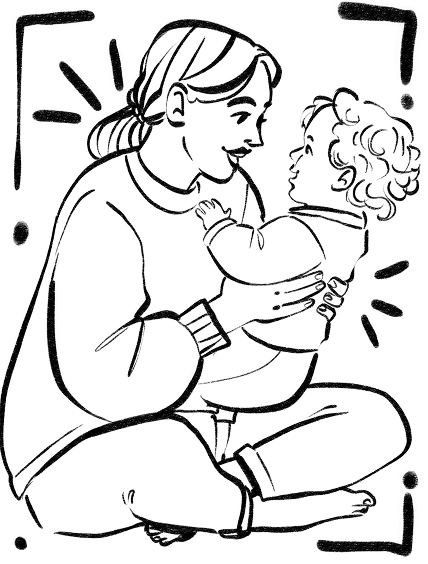
Everything we know about love is recorded before the age of three — in the bodily sensations of safety or its absence. John Bowlby and Mary Ainsworth showed that a child’s brain forms an internal working model of relationships, which it then uses to “read” everyone else. It becomes a filter of perception: which signals to recognize as love, and which as a threat.
Oxytocin and vasopressin make a loved one biologically “ours.” Dopamine turns their presence into a predictable reward. That’s why we repeatedly choose those who perfectly fit our childhood template — even if the template is warped. The child who was comforted with delay will seek out coldness and call it “independence.” The child who was smothered with anxious care will suffocate from any form of “forever” and call it “a need for freedom.”
Love is the only sphere where we voluntarily tolerate what in any other context we would call abuse. Imagine: your boss stays silent for three days because “you should have guessed what he wanted.” You’d quit that same day. A friend demands: “Prove you need me — stand outside my building.” You’d tell them off. But when a loved one does it, you suddenly start proving, pleasing, enduring — because there is no immunity against a childhood script. It can be rewritten, but only through conscious, almost surgical observation of your own automatic reactions — through studying yourself as an unknown biological species.
The hardest exam is the moment of breakup. When we are rejected, the same network activates as with physical pain. The anterior cingulate cortex and the insula don’t distinguish: is it a broken leg or a broken bond? Evolution did not anticipate that social exclusion would become the main threat to survival for modern humans.
At the moment of breakup, an ancient program kicks in: “get them back at any cost.” If you give in, the neural pathways that connected you to that person strengthen again. But if you endure the pause without anesthesia (alcohol, a new romance, endless scrolling), a rare thing happens: the old pathways actually begin to break down. This is a neurobiological withdrawal. And it is in this that you pass the exam — the exam for which all of your previous life has been preparing you.
The next exam session is an elective called “friendship.”
There are no hormones here, no romantic fog. It tests the pure ability to tolerate another person beside you when the emotional background is no longer tinted rose.
The brain remains evolutionarily a comparing machine: mirror neurons and the reward system automatically register when another person gets more status, attention, or resources. Envy arises instantly and involuntarily — it is an ancient social calculator. The true depth of friendship is measured not by the absence of that flash, but by what happens in the next few seconds: can you hold it inside without turning it into devaluation, sarcasm, or withdrawal?
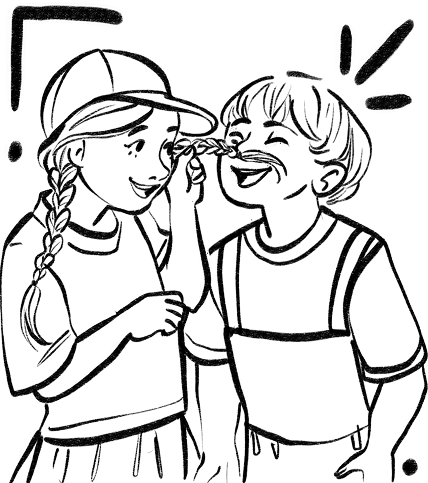
Friendship constantly forces us to practice emotional maturity in miniature. It requires the ability to rejoice in another’s success without feeling that your own light is dimming. And simultaneously — the ability to stay close when the other is at rock bottom, without frantically trying to “fix” them just to avoid drowning in their pain. Most friendship breakups happen because of a cumulative inability to endure these two poles at the same time.
Here, as in love, old childhood roles manifest themselves especially clearly: someone spends their whole life as “the one who is saved,” someone as “the one who always has to be strong.” And only conscious observation allows these scripts to be gradually rewritten. We choose our friends ourselves, and that is precisely why friendship remains one of the most accurate mirrors of who we have truly become.
And then there’s a subject that most try to keep off the schedule entirely — because it smells of anxiety, shame, and the fear of death. That subject is money
Our financial decisions are almost never about money. They’re about meaning, safety, love, and shame — absorbed in childhood. Scientists (Brad Klontz, in particular) call these unconscious beliefs money scripts. They are formed from “financial flashpoints” — moments when a child first sees money become an instrument of control, punishment, proof of love, or the cause of a scandal.
If money appeared unpredictably in the family, the adult will spend it as if it might be taken away tomorrow. If love was measured by material proof, they will confuse their own worth with the size of their salary. If money was a source of shame, they will avoid it — even at the cost of their own well-being.
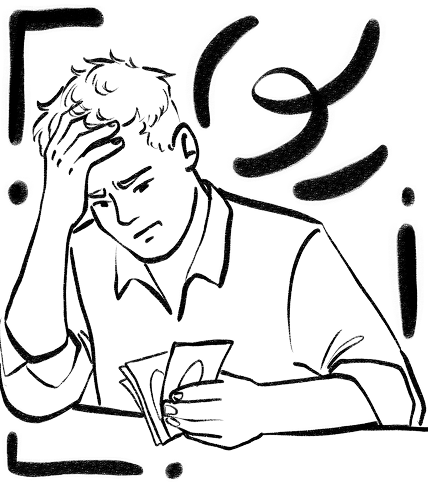
Financial maturity is not about the ability to keep a budget. It’s about the ability to endure your own anxiety without resorting to familiar defenses. Not buying something when fear is sitting inside you. Not saving money when you feel ashamed. Not staying silent when you need to ask.
There’s another subject that everyone takes — conflict
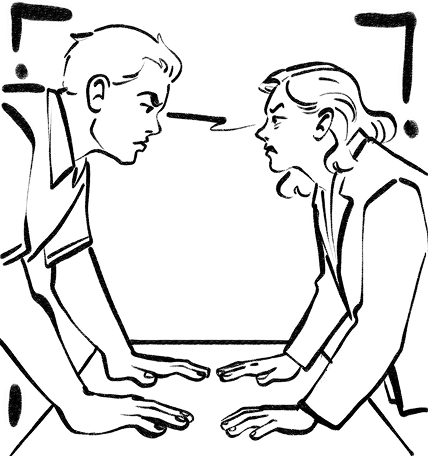
When the threat is real, the brain offers two evolutionarily proven options: fight or flee. Social life demands a third — to stay and talk, while remaining vulnerable. This goes against all our biology, so most choose compromise strategies: humiliation, sarcasm, silence, self-devaluation.
Those who have experienced enough real pain know this: the only way to remain human in a conflict is to name your vulnerability out loud — before the rage turns into a weapon. To say: “I am so angry right now I could smash this cup, but I don’t want to lose you.”
This is the highest form of self-regulation. And our species learned it only very recently.
And finally, the discipline that no one likes to attend: loneliness
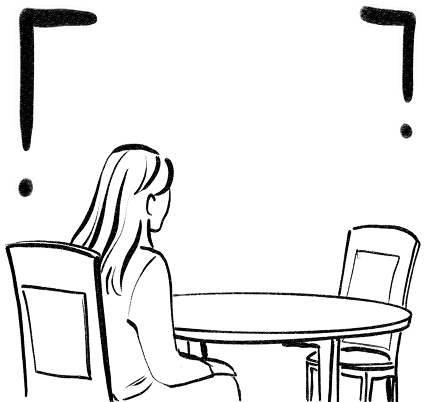
We run from it by every available means: podcasts, TV series, endless scrolling — anything not to be left alone with ourselves.
But in the silence, the most important thing begins. Neuroscientists call it the work of the default mode network. The brain sifts through the past, analyzes mistakes, builds the future, and meets the present self.
It is in these moments that we first can distinguish our own desires from those of others. It is here that all of our lived experience is digested. People who fear loneliness often remain in toxic relationships, in jobs they hate, in friendships without respect. Without silence, true maturation is impossible.
Instead of a Conclusion
We present to the world an edited version of ourselves: diplomas, job titles, beautiful photographs. And yet, inside, there’s still a quiet ache of incompleteness. Maybe it’s not that we “haven’t worked hard enough on ourselves”? Maybe it’s that we still divide life into “education” and “everything else”?
If we stop dividing, it turns out that “everything else” is the main education. No grade book, no external evaluations. Only one document, which cannot be forged and cannot be lost: your own biography.
And the only question that truly matters — asked in complete silence, when no one is watching and no one is grading — is this: “Have I become at least a little wiser than I was a year ago? Braver? More honest with myself?”
If something inside quietly but confidently answers “yes” — the exam session has been passed.
The cell divides into the nucleus and cytoplasm. Our journal divides into interesting facts and discoveries.
Thank you!