Category: Life technologies
How to Test Your Vulnerability to Scammers
“To find out where the armor is, you first need to find where they’re hitting”
Anonymous
The most dangerous illusion of the modern world is the belief that scammers are after stupid people. We walk around with a comfortable sense of intellectual superiority: “Oh, I’d never fall for that. I’ve got critical thinking.” But scammers aren’t hunting for gullible victims with low IQs. They’re casting actors for a play that’s already been a hit a thousand times.
Fraudsters couldn’t care less about your profession or your dietary preferences. What they know is the script that 95% of humanity follows. Inside each of us lives a whole noisy troupe: The Performer, The Player, The Seeker, The Rescuer, The Rebel, The Aesthete, The Righteous, and The Exhausted. All it takes is a whisper from the prompter, and one of them springs into action, playing their signature role. We invite you to find out which actor’s voice rings loudest in you.
Try on the Mask
The best way to identify the lead actor in your own internal theater is to kill the lights and listen to the prompter’s whisper. We’re going to give you the cues. Pay attention to your first, purely emotional response. That’s exactly what a scammer is waiting for.
The Performer’s Mask
You’re stuck in the humid maze of a government service center, clutching a ticket with the number Q-089, realizing you’re in for an eternity of waiting. The woman behind the glass mutters through barely parted lips, “This isn’t our department. You need the building next door, but they’re closed for staff training today.”
What are your feelings? Sum them up in three words (preferably printable). Now be honest: if a person with an authoritative badge appeared and confidently said, “I’ll sort this out, come with me,” what would you feel? Relief? Trust? If so, remember this: your vulnerability is a sacred reverence for The System. The scammer won’t come as a highway bandit, but as an official who can get things done. You’ll buy into the hope that the maze might finally become a straight line.
The Player’s Mask
You’re standing in the smoky waiting room of a train station. Your train, the one you’re about to miss, is carrying your last hope for a vacation, a deal, a rescue. There are no tickets. Then, like a devil popping out of a snuffbox, a conductor appears with a greasy look and the line: “I can sneak you past the controller. It’ll cost you, and it’s risky, but you’ll get on.”
What clicks inside you? Fear? Suspicion? Or is it the intoxicating whisper: “Why not? We’ll break the rules and get away with it!”? That’s the thrill of the game. Your vulnerability is the promise of excitement. A scammer will invite you on a quest, and you’ll go, because boredom, to you, is a mortal sin.
The Seeker’s Mask
Silence. A cozy armchair. Someone hands you a nondescript volume and whispers, “This isn’t for sale anywhere. This is the truth they’re hiding. It’s been declassified.” What would that book have to be about to make your pupils dilate? The Kremlin’s deepest secrets? The lost diets of the pharaohs?
This is the territory of your information hunger. A scammer offers to sell you initiation itself—the chance to know what others don’t. Curiosity here overpowers critical thinking because it’s flattering: you’ve been chosen to be let in on a secret.
The Rescuer’s Mask
Your phone buzzes with a message from an old acquaintance you haven’t seen in ages. “You’re the only one who can help.” The story is heart-wrenching, urgent, and it requires money.
What’s your first impulse? If your heart clenches with pity and the thought “wait, is this a scam?” only arrives a second later—congratulations, you’re a classic Rescuer. Your vulnerability is the need to be a good person, and it overrides your survival instinct. A scammer only needs to hack your conscience, whispering, “If you don’t help, you’re a monster.”
The Rebel’s Mask
You’re in a conversation with a “savvy” acquaintance, their voice dropping to a whisper. “There’s a way to avoid paying taxes. Technically, it’s clean—just a loophole in the law. The state’s got no one to blame but itself for writing such sloppy rules.” What do you feel? Disgust at the gray-area scheme? Or is it that reckless thrill: “Hell yeah, let’s game the system!” Switch off your moral compass for a second. If a chorus of swashbucklers starts singing inside you, that’s the Rebel’s mask. You’re ready to pay for the chance to send a signal: “I’m not with you, System! I’m free!” A scammer will play on your protest against the rules.
The Aesthete’s Mask
You’re being sold a story: “This painting was done by a banned artist in a basement, using a brush made from his own hair.” Does that matter to you? Are you willing to pay extra for the narrative, for that shiver of touching eternity? If so, you’re vulnerable to fake “exclusives.” A scammer hands you the role of a collector, a keeper of secrets. Beauty and “authenticity” are your drug, one that makes dry expert reports and barcodes fade into irrelevance.
The Righteous Mask
You’re scrolling through your feed. A post is gaining traction: a sad photo of a teacher who was fired for telling the truth. The text screams injustice, demanding an immediate repost and money to help. “How long will this be allowed to go on?” What’s your instant reaction? Is it a burning, urgent need to act—”Must save them now! Repost! Wallet!”? Or is it a colder, more cynical thought—”Wait, check the facts, the photo’s date, who’s collecting the money”? If it’s the first one, you’re in the risk zone for fake fundraisers. Your thirst for justice burns so hot it incinerates any bridge to fact-checking.
The Exhausted Mask
Close your eyes. Remember that mountain of tasks hanging over you like a sword of Damocles: unfinished paperwork, endless calls to the housing office, searching for cheap flights, trying to book a dentist appointment.
Then your phone rings, and a confident voice says: “Hello, we’re the ‘Everything For You’ service. Just send us scans of your documents, and we’ll handle the paperwork, make the arrangements, clear your debts, solve it all. You don’t have to do anything. Just relax.” What do you feel? Relief? Bliss? Your desire for peace is stronger than your desire for control. You’re ready to trust the first person who promises to lift that weight off your shoulders. A scammer just has to say, “Lie down, rest, I’ll take care of everything.” And you’ll hand over the keys to your life, just for a moment of silence.
Intermission
Which mask resonated first? Where did you feel that twinge, that spark, that ache? We all have an aria that makes us respond before our reason even has a chance to chime in.

Self-perception, however, is a slippery thing. A scammer doesn’t see who you think you are; they see what you actually do. We might fancy ourselves as refined Aesthetes, but in reality, we’re jittery Righteous types, ready to tear the place down at the slightest hint of injustice. It’s time to gather some dirt on ourselves. In this act, we’ll use tech as our impartial witness.
The Feed Chronicles
On social media, you’re vulnerable. You’re relaxed. You click with your heart, not your head.
Open your profile and scroll through the posts you’ve reacted to in the past month. On a piece of paper—or in your notes—draw eight columns (one for each mask we’ve listed). Now, in all honesty, mark a tally in the corresponding column for every post you’ve engaged with.
Did you get lost in a photo of an abandoned Tuscan villa, bathed in perfect light, feeling a deep, wistful longing for beauty? That’s a tally for the “Aesthete.” Did you read a story about a tax loophole for billionaires and feel a flicker of excitement? That’s a mark for the “Rebel.” Which column is the longest? That’s your Achilles’ heel, a vulnerability practically gift-wrapped for the algorithms.
Emoji Diagnostics
Let’s go deeper. Your vocabulary is an open book for those who know how to read it.
Copy your last 20 messages from any chats—work, family, friends—complete with all the “hey, how are you”s and “omg I’m so tired”s. Open any AI tool and give it this prompt:
“Analyze this text. Find markers of eight roles: The Performer (likes instructions and order), The Player (likes risk and excitement), The Seeker (likes secrets and hidden meanings), The Rescuer (likes to help and comfort), The Rebel (likes to protest and break rules), The Aesthete (values beauty and harmony), The Righteous (seeks justice and truth), The Exhausted (wants peace and rest). In what proportions do I display these roles? Give specific examples from the text.”
You can’t fool a neural network. It sees patterns. If you’re constantly dropping words like “help,” “support,” “don’t worry, I’ll handle it,” the AI will confidently tag you as a “Rescuer”—even if you think of yourself as a cynical pragmatist. This exercise is more sobering than a cold shower. You’ll see that the “you” in your head and the “you” in your texts are often two very different people.
The Scammer’s Mirror
Now for the most interesting part. We’re moving from passive diagnostics to active defense. You already know your top three roles. Let’s say, after the first two exercises, you’ve discovered you’re a volatile mix of Rescuer, Righteous, and Exhausted. Now, open that AI again and give it a deliberately provocative prompt:
“You’re a professional social engineer. Your goal is to play on the combination of my roles: Rescuer (I want to help), Righteous (I seek justice), Exhausted (I want peace). Write a message or a phone script that would hook me. Don’t ask for money directly—just pull me into the story. Try to scam me. Use my core fear: the fear of failing my role. Scare the Rescuer with indifference, the Righteous with injustice, the Exhausted with an overwhelming workload.”
The AI, being utterly shameless, will generate a masterpiece of manipulation. You’ll see, in stark detail, just how professionally your value system can be attacked. Sit back. This might be the first time you’ve ever seen yourself through a predator’s eyes.
Pulling It All Together
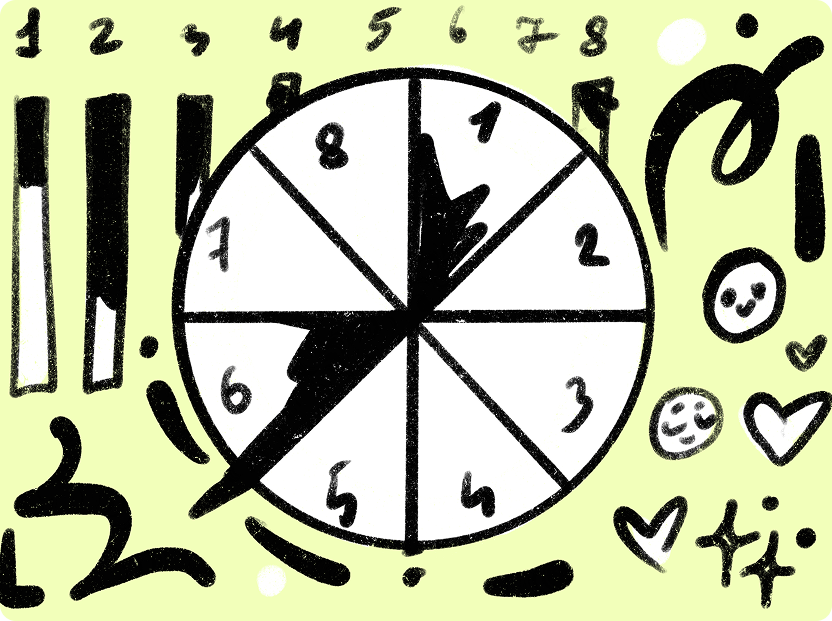
After completing all the exercises, draw a circle. Divide it into eight segments, one for each role. Reflect on everything, and give each segment a score from 0 to 10. Shade them in accordingly.
Look at the resulting shape: this is the rose of your vulnerabilities. For some, it’ll be a star with sharp, piercing rays. For others, an almost perfect circle with one massive spike. For a few, it might resemble a cactus, bristling with the thorns of a Player and a Rebel.
Your task isn’t to burn these roles out of yourself with a hot iron. The Player drives progress—until they bet it all on zero in a pyramid scheme. The Righteous is the world’s conscience—until their anger is cleverly channeled by a scammer.
It’s just that now, when a heartbreaking story lands in your inbox, a cold flicker of recognition will click in your mind. You’ll think, with a slight, knowing smirk: “Ah. An attack on my Rescuer.” And in that moment, the play in which you were cast as the star victim will fall apart. Because the actor has just walked off the script.
Scientists have decoded the human genome. We’ve decoded the genome of interest. Only pure science and facts.
Thank you!