Category: Life technologies
How not to fall for the tricks of scammers
“Every morning you should tell yourself:
today I will meet a fool, a braggart,
a rude person, a swindler”
Marcus Aurelius
I had just finished my second snack and was considering moving on to the third when Max’s boring face appeared in the cat flap.
“Leo?” called the neighbor, packing a plea, a complaint, hope, and a promise into the sound of my short name. I could only sigh and make room at the food bowl.
“What is it this time?”
“Lottery,” Max replied, glancing at my bowl.
Of course. Old as the hills, but Max’s human hadn’t heard of it. Then again, this fool of the Heavenly King prefers to experience scams personally. Over the past year, he’d been tricked by the bank’s security service, paid some mysterious person for a “highly lucrative job,” dragged into a risky crypto scheme by a new lover, lent money to a “brother” in a video message, and now… a lottery.
Once again, I’d have to live on the scraps from Max’s cat food for a month. Luckily, my human has a healthy skepticism and knows safety rules by heart. The funny thing is, Max knows them too—but a cat isn’t responsible for the human.
And really, it’s simple. Honestly. To avoid falling into a scammer’s trap…
Take a Pause
When my human is offered something “urgent,” he rushes at full speed. First, he carefully chooses tea, heats the water, pours it over the leaves, reads a bit while the tea brews, pours himself a big mug, and sips cautiously to avoid burning. In this whirlwind, he barely has time to think about what’s happening. Then, after tea, he takes another twenty hours to consider.
Impulsiveness and haste are scammers’ best friends. If your smartphone screams: “urgent,” “act now or never,” “you’re almost late,” someone is trying to leash you and drag you into a cold street, leaving you penniless. Do you want that?
Take a pause. Think. Over time, you’ll see that haste is your enemy—unless you’re the mouse Max is chasing down the hallway.
Trust No One
Yes, that’s categorical. No one, ever. Last week, my human’s sister messaged him. I barely tolerate that troublemaker, and she visits no more than three times a year. She had the audacity to write: “Give me, brother, a little bit of a lot of money—I accidentally ran someone over.”
My human panicked: “What? You just got a car from your husband a week ago!” But his sister pressed on: “Oh, what a misfortune…” and kept messaging.
My human stopped reading. His sister has neither a husband nor a car. Suspicious and careful, he checks every message, ignores silly offers, verifies website addresses for twenty minutes, and never talks until the other person properly identifies themselves. Sometimes, he even looks at me as if to ask for a password.
Even if your mom calls on video chat, don’t act immediately. Listen, then call her back to clarify. Modern technology works wonders—evil ones.
Imagine if neighbors verified sources—Max wouldn’t be freeloading. So check everything, even if it’s “mom.” Sometimes it’s just a bearded man from Detroit.
Privacy Is Sacred
My name is Leo, I’m a four-year-old Ragdoll in my prime, my chip number… well, tough luck! You want the safe code? Nope, not telling. Ask again? Nope.
“This,” my human says, “is confidential information.” Max and I barely have any of it—we don’t even have documents, just whiskers, paws, tail, and a personal chip. Humans, on the other hand… they’ve got papers everywhere. My human keeps a thick folder in his safe, but I’ve never once heard him dictate anything from it over the phone or type it into a computer.
Right now, though, I can hear him with these ears, scolding the neighbor that banks, the tax office, or the police never ask for such things over the phone, messengers, or email.
Can you imagine what he’s saying? The less information about you that’s online, the harder it is to trick you—and vice versa. Someone calls: “Hello, John Doe, yesterday you bought a robot vacuum and won a million packs of cat food.” Max’s human immediately thinks: “Okay, John Doe—that’s me, I did buy the vacuum, so the gift must be real,” and he agrees to everything, pays, and ends up with no money and, of course, no million.
How did the scammers know he bought the vacuum? Because he posted so much about it on social media that even I could pretend to be his friend or relative. If he had used a fake name online and kept his life private, those sneaky people wouldn’t have gotten him on the hook of trust.
Use Logic and Trust Your Instincts
“Imagine,” Max complains, “he said his heart felt something fishy with the lottery. If he felt it, why did he enter?”
Right, humans have plenty of “sensitive organs”: some feel things in their gut, some in their heart, some in some mysterious inner sense, and some in a place where, in a decent cat, the tail is attached. My human prefers to think with his head and keeps trying to teach this magic to the neighbor.
As for me, I teach in my own way: if the fur on the back of your neck stands up—don’t go there. Don’t move forward. Turn around. In cats, this is called “intuition,” and it never fails.
It’s the same with scammers. Their tools are fear and greed, generously seasoned with rush and urgency. My human says that even in situations like this, logic always rings the bell of intuition—and that signal is what those “sensitive organs” are picking up.
If something inside you flinches, your fur bristles, and your paws start slowing down on their own—don’t argue with it. Listen. Think afterward. And say a firm “no” to anyone who demands immediate action, threatens consequences, or offers an unbelievably profitable deal you “can’t refuse.”
You can—and should—trust your intuition. Unless, of course, you enjoy being fooled.
Two heads are better than one
After many long talks and much persuasion, Max’s human and mine came up with a plan to protect my food bowl from the starving neighbor: from now on, in any unclear situation, my human makes the decision. Just like that.
“Relatives” once tried to get to Max’s feeder. Something had supposedly happened to an uncle.
— “But it’s my uncle,” the neighbor whimpered into the phone.
— “Did you tell everyone the password? Including your uncle?” my human asked sternly.
— “Well… yeah…”
— “Then ask him. If he can’t answer—block him immediately.”
That’s how they came up with a way to verify all kinds of “relatives.” You tell everyone the password in advance—“herring” or “mackerel,” for example—and in a critical moment, you ask for it. They even gave it a smart name—I remember it—“the neighbor security protocol.”
It’s actually a solid approach: filter out suspicious stories involving loved ones using a password, and always consult someone you trust on financial matters. It’s always easier to fool one head than two—especially when the second head is as stubborn and suspicious as my human.
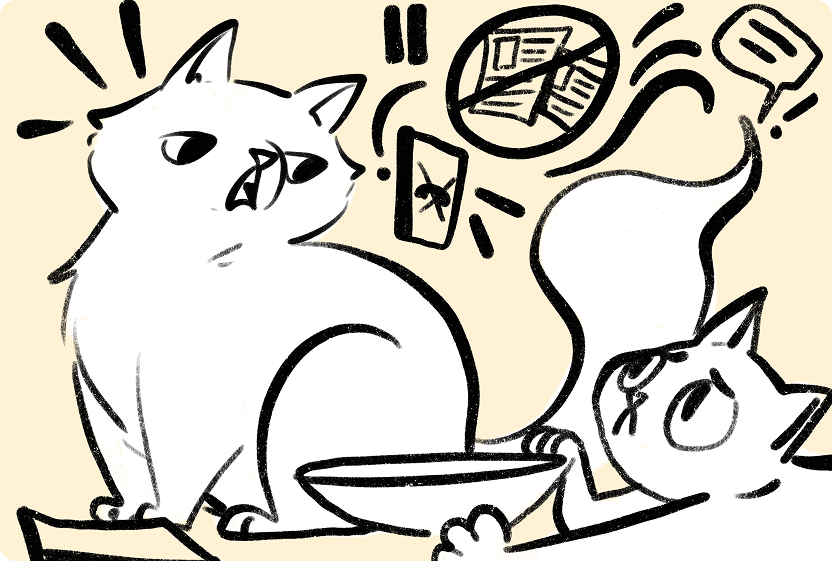
Password management
The neighbor seemed to come to his senses. But neither I, nor Max, nor the crickets outside had any doubt he’d get scammed again soon. And of course—it happened.
— “Do you realize you’ve been hacked?” my human said into the phone, not even trying to hide his disapproval. “And what was your password? Ah, 12345qwerty… figures.”
Scammers are clever—common sense alone isn’t enough against them. Those who resist them in real life get caught in the digital world. It’s like a big wardrobe where people store important things. Every compartment has a lock—a password. But if the password is simple, like Leo2024, that’s a gift to a crook. They’ll get in and make a mess: steal something or do damage in your name.
Right now my human is explaining that a password should be long and complex—and different for every site. For those whose memory is full of holes, like the tastiest cheese, there are password managers. You only remember one set of characters, and it keeps the rest safer than Leo’s favorite plush ball.
Even if you don’t complain about your memory—install one anyway. These days it’s a must-have. My human says Bitwarden and 1Password are already in the browser… if only I knew what that meant.
Two-factor authentication
The password didn’t help. The neighbor showed up wide-eyed, poking my human in the chest and shouting something. In response, he got nothing but Olympic calm and another lecture.
This time they were talking about extra protection. In short: enable two-factor authentication everywhere you can. Even if a scammer steals your password, they’ll also need a code from an SMS or an app—which they don’t have and can’t get. You’ll need it too, of course, but a little inconvenience is a small price for security.
For maximum protection, use authenticator apps or hardware keys. These days, even SMS can be intercepted—apparently even by mice in the basement.
Shame you can’t lock my food bowl from Max with two factors… though where would my code even arrive? On my whiskers?
Antivirus protection
Right after the neighbor came Max—with a decent-sized dead rat dangling from his mouth.
— “Look,” my human said, “your cat brought in a rat. What if it’s radioactive and already infecting everything around it? Passwords and codes are good, but not enough. Viruses are like radiation from that rat—they can get into your computer, steal passwords, lock your screen, and even turn it into a branch of a mining farm. You can’t work without antivirus software.”
The neighbor snorted and started talking about something called Windows Defender. My human didn’t argue—just hinted that for other operating systems, built-in protection might not be enough, if it exists at all. On MacBooks, as far as I can tell, there’s no such feature. Protection is never excessive, so adding browser security extensions won’t hurt either.
Right. Got it. In our house, the protection is me. While my human was explaining that even if security software “slows things down,” you should never turn it off—I chased Max outside, just to be safe.
Software
There’s no one more persistent than scammers. No matter how hard you lock things down and build defenses, they’ll keep looking for gaps: close the window of trust—they’ll come in through the door of an unprotected computer; install antivirus—they’ll look for a cat flap in some software vulnerability. I’m paraphrasing my human a bit, of course.
Old software always has vulnerabilities. Bad people find them and use them against you. Good people, on the other hand, spend a lot of time trying to prevent that—patching holes in software like an old blanket.
So if your metal friend asks for an update, don’t postpone it. It’s like changing the litter in a tray on time: hygiene comes first—even digital hygiene.
And don’t dump just anything into your tray! Choose your apps wisely, otherwise you’ll end up bringing home some nasty code hidden inside something that looked useful.
Marketplace drama
Max’s human has a new problem. Last week he saw an ad: a boat motor he’d been dreaming of—half price. He clicked the link, and the site looked exactly like his favorite marketplace. Same logo, everything. He entered his card details—error on the screen. Tried again—another error. An hour later, all the money on his card was gone.
As my human explained, that’s called a phishing clone site. Scammers copy a well-known store, change one letter in the address (like replacing “o” with “0”), and run ads. A person bites on the “great deal,” enters their details—and goodbye money.
But that’s just the beginning. The real trouble starts when they steal your marketplace account. Why? To use your credit line. Scammers hack your profile, order expensive electronics in your name—but to their own address—and you’re the one who has to pay. Or they pretend to be a seller, ask you to switch to a messenger app, and request your card details there. The moment they get your money—gone without a trace.
My human uses a separate card for purchases. He only puts exactly as much money on it as the item costs. If it gets stolen, it’s pennies—not his entire savings. And he never discusses anything with sellers in private messages—everything goes through secure transactions on the platform itself. Because the marketplace takes no responsibility for deals made outside it.
One more trick: if you get a message saying “Your order has arrived, confirm the code,” but you didn’t order anything—don’t tell anyone anything! That’s not a courier, that’s an account hacker. An SMS code is the key to your digital apartment.
Secure payments
Yesterday I found what looked like a perfectly good chicken leg in the yard. I was already imagining the exquisite taste, but the moment I used my nose, the joy vanished like puddles under the June sun. Rubber. Tasteless. A scam—nothing but scams everywhere.
Humans, by the way, get tricked all the time too. Remember I said my human carefully checks website pages? That’s because behind a nice-looking storefront there can be the same scammers. They create fake versions of your favorite stores and quietly take your money.
To avoid falling for phishing sites, you need attention. Modern crooks have everything: “https” in the address, a nice little padlock, plenty of reviews, a famous brand, and an irresistible offer. But for no chicken leg in the world should you register or buy anything before checking the URL for extra characters, verifying the company’s details, and making sure there’s a valid SSL certificate.
QR code fever
Yesterday Max brought home a shiny piece of paper from the trash. A real treasure. On it was a strange square pattern.
“It’s a QR code!” Max said. “Probably a link to a free box of Whiskas!”
I had to explain that not everything shiny is Whiskas.
My human doesn’t trust those squares. Especially the ones stuck on poles: “90% off cat food! Scan and get it!” Or on building entrances: “Washing machine repairs for pensioners at a discount.” He says if you scan something like that, instead of a discount you might download a remote access app onto your phone—and that’s it, a scammer is basically sitting in your pocket counting your money.
My human won’t even open QR menus in cafés. Says the waiter can bring a paper one. And I believe him—his nose for trouble is almost as good as mine for fresh fish.
So remember it like the multiplication table: don’t scan codes from random flyers, trash finds, or strangers. And if you really feel like tempting fate, at least check where the link leads. Good scanner apps show the URL before opening it. And never enter any information after scanning until you’ve checked everything ten times over.
Act immediately—without panic
If you do get scammed, don’t be like our neighbor. Don’t panic. There will be time later to mourn your losses—first, you act.
Figure out what happened and where, then depending on the situation: block your cards, change your password (especially if you use the same one everywhere—shame on you), change all passwords, and contact your bank and the police.
The faster you react, the less you lose. And maybe your cat won’t have to go looking for food next door.
Anti-scam checklist
Max hasn’t visited in two weeks. From this, I draw the bold—and possibly premature—conclusion that my human’s efforts are working. And if they work, they should be shared at the neighborhood cat meeting. So we made a short checklist you can hang on your fridge next to the feeding schedule.
Here it is:
Stay calm when you receive unexpected “urgent” messages.
Discuss suspicious situations with people you trust.
Don’t send money to strangers.
Don’t share personal information.
Remember: banks and government agencies never ask you to move money.
Double-check everything.
Use strong, unique passwords for every service—or a password manager.
Enable two-factor authentication on all important accounts.
Don’t click links in emails, SMS, or messages if you’re not sure about the sender.
Keep all your software up to date—OS, browsers, antivirus.
Learn about new scam schemes regularly.
Trust your intuition.
But don’t rely on the checklist too much. Your main weapons against scammers are logic, intuition, attention, and information. Make it a habit to learn about new scams once a week—and tell your loved ones. That’s much more reliable.
— “Hey, Leo!”
Oh no… here we go again.
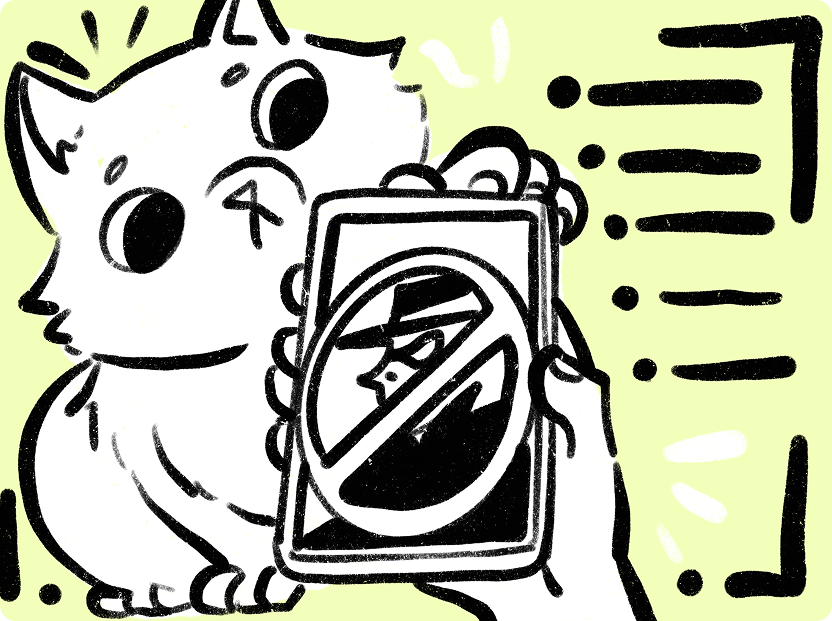
We’ve ventured beyond the boundaries of time and space. By the way, it’s empty there.
Thank you!