Category: Cognitive technologies
Destructive Chemistry: How Shadow Geniuses Stay Ahead of the Law
“He who understands nothing but chemistry does not even understand chemistry properly”
Georg Christoph Lichtenberg
Disclaimer. The editorial board of The Global Technology firmly states that this article is intended for informational purposes only. It does not promote the use, possession, distribution, or manufacture of prohibited substances. Our aim is scientific literacy, thoughtful analysis of current global challenges, and discussion of possible solutions.
In the densely populated X-settlement, life had been bustling as usual. Among the many private homes, one of the most unremarkable cottages suddenly made every crime report in the region.
A young couple lived there—chemistry graduates who had rented the house after finishing university. Polite, friendly, seemingly ordinary. They worked in the city but enjoyed the quiet of the surrounding forest. No parties, no scandals, no suspicious visitors. Only two oddities: the lights in their house never went off, and water seemed to run all night long. In the mornings, a faint chemical smell sometimes drifted across the neighborhood—but few questioned it. They were chemists, after all.
When police sirens shattered the summer calm, no one expected what officers would find: a clandestine drug laboratory.
As later investigations revealed, it had started with legitimate pharmaceutical experiments—part of their final-year university projects. Iterations of formulas gradually led to the creation of so-called “designer substances”—compounds that stimulated brain activity and allowed users to function for days without sleep.
The young chemists admitted their guilt. But that did not reduce the scale of harm. Thousands of ordinary people were drawn into dependency during the lab’s operation. Only a fraction would ever escape it.
Why weren’t they caught sooner? How many similar laboratories exist worldwide? And can destructive chemical enterprises ever be fully eradicated—or are they structurally stronger than the laws meant to contain them?
Let’s examine the mechanics.
Law and disorder
Designer drugs are not always “new” in the sense of discovery. More often, they are familiar molecular frameworks with slight modifications. The principle is simple: take a prohibited compound, alter a side chain or substitute a single atom, and the result becomes—formally—a new substance not yet listed as illegal. In practice, the effects, risks, and addictive potential remain.
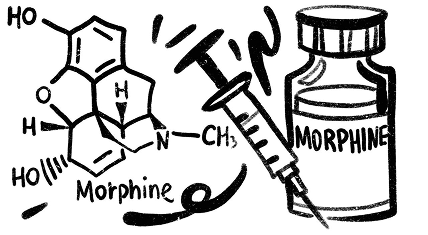
This strategy predates the internet. In the 19th century, morphine—isolated from the opium poppy—was hailed as a breakthrough painkiller. It was also profoundly addictive. A modified version, diacetylmorphine—better known as heroin—was initially marketed as a “safer” alternative. In the United Kingdom, under the name diamorphine, it was prescribed well into the 20th century before its risks became undeniable.
Today the cycle runs faster.
Legal pharmaceutical development takes years—sometimes decades—of trials, regulatory review, and massive investment. Shadow chemistry can operate with a handful of trained chemists, access to industrial reagents, and improvised laboratory space. By the time legislation catches up to one formula, another is already circulating.
This creates a perpetual cat-and-mouse dynamic between regulators and underground laboratories.
Why money won’t stop them
There is a financial asymmetry rarely discussed openly. Producing a batch of illicit synthetic stimulants in a clandestine lab may cost a few hundred or thousand euros. Developing a legitimate pharmaceutical product can require investments in the tens or hundreds of millions before a single pill reaches a pharmacy shelf.
The shadow economy does not bear the cost of: clinical trials, regulatory approval, insurance, taxation, compliance audits, or legal oversight. There are just no such expenses.

A single profitable batch can finance operations for years. If one lab is shut down, another emerges elsewhere. Losses are treated as operational risks.
Legal pharmaceutical companies cannot pivot in a week: it needs 5-10 years for development, testing and registration. An underground chemist can respond to online demand almost immediately—design, synthesize, package, distribute—without bureaucratic delay.
Shadow chemistry does not win because its practitioners are more brilliant. It wins because it plays by a different set of rules—or none at all.
Geography of impunity
Underground chemistry has no single capital. It is dispersed across countries and jurisdictions with surgical precision—just enough to remain immune to a coordinated strike.
China. Often described as a global manufacturing hub for chemical precursors and ready-made “designer” molecules, China has played a complex role in this ecosystem. In many cases, chemical producers operate legally until a specific compound is added to a domestic controlled-substances list. Regulatory updates can take time, and by the moment a ban is enacted, production may already have shifted to a slightly modified formula. From there, shipments flow toward Europe, the United States, and Southeast Asia. Intercepting them at the source is difficult: precursors can be labeled as legitimate industrial chemicals, fertilizers, solvents, or laboratory reagents.

Eastern Europe and the Netherlands. These regions have historically hosted so-called “finishing labs,” where imported intermediates are processed into final products. The Netherlands, in particular, became known over decades as a major center for the synthesis of MDMA and amphetamines—not because of weak laws, but because of established infrastructure: access to chemical supplies, efficient transport networks, and existing distribution channels. When one laboratory is dismantled, others may surface nearby—in the Czech Republic, Poland, or the Baltic states. European law enforcement agencies often find themselves engaged in a game of “whack-a-mole,” with mixed success.
The dark web and cryptocurrencies. Physical geography is increasingly secondary. Payments may be conducted in cryptocurrency. Communication takes place through encrypted forums and messaging platforms. Logistics rely on private courier services, drop addresses, and virtual offices. Governments attempt to trace transactions, but tools such as crypto mixers complicate attribution. A seller might be in Thailand, a warehouse in Poland, and a buyer in Texas—without any of them ever meeting in person.
Underground chemistry is no longer a local enterprise. It is a distributed global network that uses borders as shields and differences in legal systems as strategic advantages. While a regulator in one country adds a substance to a prohibited list, a manufacturer elsewhere may already be shipping its chemical cousin. No single court in the world holds jurisdiction over the entire chain.
Designer psychostimulants: how legal molecules become lethal
The gap between the speed of underground synthesis and the sluggish pace of regulation is especially visible in the world of psychostimulants. It is the perfect testing ground for shadow chemistry: the base molecules are often legal, demand is steady, and modifying a formula does not require sophisticated equipment. Designer substances thrive in this environment.
Psychostimulants are a broad class of compounds that accelerate thinking, reduce fatigue, and enhance performance. In the legal sphere, they exist as medications (for ADHD, narcolepsy, depression), everyday stimulants (caffeine, nicotine), and mild adaptogens (ginseng, eleuthero). When used under supervision, their risks are limited and their benefits tangible.
In the illegal sphere, the same mechanisms are used for different purposes. Underground chemists take permitted—or already banned—compounds and alter their structure. That is how amphetamine, methamphetamine, ephedrone, MDMA, and mephedrone emerged. Formally, these are new substances. In practice, they are familiar stimulants with unpredictable toxicity, rapid dependence potential, and no therapeutic value.
Some of them began as legitimate drugs. Amphetamine (“phenamine”) was sold in Soviet pharmacies until 1975. Dextroamphetamine is still used in European medicine. MDMA was first synthesized as a byproduct of methamphetamine before becoming a symbol of rave culture. Mephedrone was created back in 1929, then forgotten for 70 years—until an underground chemist known as “Kinetic” rediscovered it in 2003 and marketed it as “bath salts.”
The camouflage of these substances is a story in itself. Mephedrone and its analogues were sold as fertilizers, rodent repellents, glass cleaners, even vacuum fresheners. Legally, they were not narcotics. Technically, they were poisons. Buyers knew they were purchasing “salts,” but assumed that if a product was allowed on the market, it must be safe.
Today, underground chemists often move faster than governments. They read the same scientific journals as licensed pharmaceutical researchers, but skip years of clinical trials and regulatory procedures. The model is simple: synthesize—crowd-test via online forums—collect feedback—modify the formula. By the time regulators blacklist one compound, an underground lab is already distributing its successor. It resembles a game in which one player writes the rules while the other has already found a workaround.
Psychedelics: design without dependence, but with risk
Among designer substances, psychedelics occupy a special place. Unlike stimulants or opioids, they rarely cause physical dependence and are unlikely to kill through overdose in a single use. Their purpose is different: to alter perception, expand consciousness, induce hallucinations, or provoke mystical experiences.
Humans have used psychedelics for thousands of years. Cacti, mushrooms, and vines—natural sources of mescaline, psilocybin, and DMT—were central to shamanic rituals and religious practices from the Amazon to Siberia. In the 20th century, synthetic compounds joined the list, including LSD, derived from ergot, along with later analogues.

In the legal sphere, psychedelics have been explored as treatments for depression, anxiety, and post-traumatic stress disorder. The evidence base is still developing, but in several countries research—and in some cases therapeutic use—of MDMA and psilocybin has already been authorized.
In the illegal sphere, psychedelics exist as well, though they are less often the product of elaborate “design.” More commonly, underground chemists reproduce known molecules or make slight modifications to bypass restrictions. The primary danger of these substances lies not so much in molecular toxicity as in their psychological impact. An anxious person may spiral into panic; someone with a latent disorder may trigger psychosis. Illusion can become a trap.
Synthetic cannabinoids (“spice”) are a separate story. They are not psychedelics at all, but laboratory-made compounds designed to mimic THC. Their “design” pursued a different goal: maximum affordability, accessibility, and legal invisibility. Early products were sold as “incense” or “herbal smoking blends,” marketed as harmless alternatives to tobacco. When specific formulas were banned, manufacturers altered a single atom and returned to the market. Prices stayed low, demand steady, and the consequences often far more severe than with natural cannabis: seizures, toxic psychosis, kidney and liver damage. Spice illustrates how “design” can create not innovation, but escalation of risk.
Pharmaceutical cynicism: legal dependence as a business model
Shadow chemistry does not emerge in a vacuum. It is preceded by society’s quiet acceptance of the same dependency mechanisms—just packaged elegantly and reimbursed by insurance.
In the 1990s, Purdue Pharma introduced oxycodone with the marketing claim that the risk of addiction was “less than 1%.” The company knew this was false. Physicians prescribed it widely for back pain, arthritis, even headaches. Two decades later, the opioid epidemic had claimed more than 500,000 American lives. When prescriptions tightened, patients did not stop needing relief—they turned to the black market. Designer chemists did not create opioid demand; they inherited it.
Diazepam, alprazolam, and clonazepam are legal tranquilizers capable of producing physical dependence within weeks of regular use. Withdrawal can last months and be more severe than heroin withdrawal. Doctors prescribe them for years; patients take them for decades. It is not called addiction. It is called treatment.
Modern SSRIs do not induce euphoria, but they can produce discontinuation syndromes severe enough to disrupt a person’s life for months. Manufacturers call it “discontinuation.” Not “dependence.” Terminology matters.
The boundary between legal and illegal does not run strictly along toxicity, addictive potential, or health damage. It runs along packaging, prescription status, and whether a company paid its taxes this quarter.
Shadow chemistry did not invent dependence as a business model. It simply removed the most expensive stages: research, regulatory approval, ethics committees. What remains is the pure substance, naked demand, and the absence of illusion.
As long as legal pharma sells similar chemistry—more slowly and at higher cost—its moral authority to condemn “designer” analogues will remain open to debate. The players sit at the same table. Some wear white coats; others wear surgical masks to avoid cameras.
Pulling the emergency brake
This is not a game that can be won outright. Underground chemistry cannot be eradicated like a virus. It is the shadow of legal pharmacology: as long as there is demand for a “quick fix” for body or mind, someone will offer the cheapest and fastest route.
But the race can be slowed. Not only through prohibition—which will always lag behind—but by shortening the distance people feel compelled to run to escape reality. Shut down illegal labs, yes—but also make real healthcare accessible. Not only imprison distributors, but stop treating addiction purely as a crime and start treating it as an illness. Not only add new molecules to blacklists, but admit honestly that legal stimulants, tranquilizers, and painkillers have been reshaping lives for decades—just more gradually and under medical supervision.

Demand does create supply. But demand does not arise in a vacuum. It grows from exhaustion, pain, loneliness, and the absence of healthier tools to cope. As long as people lack alternatives, “bath salts” and “spice” will remain a form of counterfeit anesthesia. And the only effective response is to offer something better.
This is not a conclusion. It is simply the recognition that the cat-and-mouse game is not really about cats and mice. It is about both sitting in the same room, still searching for the door.
“Chemistry extends its hands far into human affairs”
Vladimir Kutyrev, Technology Decides Everything
Our articles are an elixir of wisdom for your mind. Approved by alchemists.
Thank you!