Category: Materialization technologies
Medicinal Chemistry: From Molecules to Marketing
“The best doctor is the one who knows the uselessness of most medicines”
Benjamin Franklin
Yesterday I had a terrible headache. It would seem that nothing could be simpler than taking a pill. I opened the medicine drawer—and froze. Which one should I take? I had no fewer than three different drugs for this very situation. Reading the instructions only made my head hurt more: complicated chemical names, pharmacological actions, contraindications, side effects.
Alarmed and confused, I called my wife for help. She handed me the “right” pill and a glass of water. The headache soon disappeared. The anxiety and confusion did not. What if I were struck by something more serious? I would have to rely on a doctor’s opinion—but doctors can make mistakes, too. What if they prescribed a drug with two pages of side effects and the ominous warning: “fatal outcome possible”? What then?
To take it or not to take it—that is the question the Danish prince once asked. Not to take it, because it’s all just chemicals. Or to take it, because without it things might be even worse. That was when I realized I lacked information—and decided to figure it all out.
What is a medicine?
Even the simplest tablet is a complex chemical and technological product. In plain terms, any medicinal product is a construction made of several substances designed to prevent, diagnose, or treat disease, or to correct physiological dysfunctions in the body.
At the heart of this construction are active pharmaceutical ingredients (APIs) and excipients.
The active ingredient is the central component of any medicine. It interacts with biological targets in the body—enzymes, receptors, ion channels, even DNA. Active ingredients can be: synthetic, created in laboratories (such as paracetamol); natural, isolated from plants, microorganisms, or animals (for example, morphine from the opium poppy); biotechnological, produced using recombinant DNA technologies (such as insulin).
The chemical structure of the active substance determines its effectiveness, specificity, metabolism, and potential toxicity. A logical question arises: why not just take the active substance on its own?
Because first, it has to reach the right place in the body.
Cellulose, lactose, starch, magnesium stearate, polysorbates, glycerin—these excipients ensure stability, improve absorption, mask unpleasant tastes and odors, regulate the release rate of the active ingredient, and give the drug its physical form.
Tablets, capsules, and syrups release medication in the parts of the body where it is needed—usually via the gastrointestinal tract. Ointments, by contrast, are meant for skin and mucous membranes; swallowing them would be pointless and even harmful. Injections and infusions bypass the digestive system entirely, delivering substances directly into muscle tissue or the bloodstream. When disease attacks the lungs, aerosols and inhalation powders enter the fight.
Any medicine is an active substance delivered into the body with the help of excipients and packaged in a form that maximizes both convenience and therapeutic effectiveness.
How are new drugs created?
There are countless medicines in the world—yet each one is the result of enormous effort, meticulous research, and complex chemical experimentation. The birth of a new drug is a marathon whose finish line is woven from patents, where every step is paid for with dozens of failures and investments comparable to the budget of a small country.
The first stage is studying the nature of the disease. From a patient’s perspective, it seems simple: it hurts here—make it stop. For researchers, however, the task is to determine why the pain occurs, which biological process is malfunctioning, and which chemical reactions.
This leads to the search for a molecular target associated with the disease—perhaps a protein (an enzyme, receptor, or ion channel), a nucleic acid, or another biomolecular component whose activity is disrupted.
Once the target is identified, the second stage begins: rational drug design. The goal is to design a molecule capable of adjusting the target’s activity in the desired direction. This requires analyzing the target’s structure, studying databases of known biologically active compounds, and conducting computer modeling of molecular binding.
Increasingly, this labor-intensive process is supported by artificial intelligence, which excels at analyzing massive datasets.
The discovered or newly created molecule becomes the active substance of the future drug. But in its original form, it is rarely ideal. It may be weakly active, toxic, or unable to reach its target in the body.
This is where targeted synthesis comes in. Chemists create a series of structural analogues to modify the key molecule. Each new compound is tested for target binding, pharmacokinetics (absorption, distribution, metabolism, excretion), toxicity, and side effects.
The cycle repeats until a compound with an optimal profile is obtained. That compound becomes a drug candidate.
Drug testing
Then begins another round of trials. Before a candidate earns the status of a medicine, it must pass through three major stages: preclinical testing, clinical trials, and post-marketing surveillance.
The first stage is preclinical testing in test tubes or isolated cell systems. The goal of such tests is to assess efficacy, toxicity, stability, and solubility. If results are promising, studies move to animals. Mice, rats, dogs, and sometimes primates help researchers evaluate how the substance is absorbed, distributed, metabolized, and excreted. The same animals are used to study its systemic effects and potential toxicity.
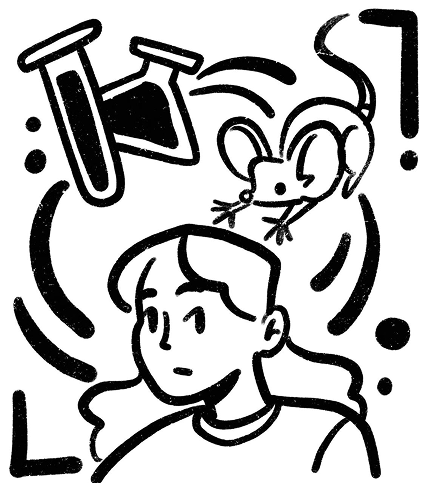
The goal is to ensure the drug is safe enough to proceed to human trials. If successful, the developer submits an application to regulatory authorities.
Before registering the drug, clinical trials in humans proceed in four phases:
Phase I: 20–100 healthy volunteers. The aim is to assess safety, tolerability, pharmacokinetics, and maximum tolerated dose.
Phase II: 100–500 patients with the target disease. Researchers confirm therapeutic effectiveness, refine dosing regimens, and continue monitoring safety.
Phase III: Large-scale randomized controlled trials involving hundreds or thousands of patients. The new drug is compared with placebo or standard therapy. These results form the primary evidence for regulatory approval.
Phase IV (post-registration monitoring): it starts after the drug enters the market. Physicians and scientists observe its use in large populations to detect rare or long-term effects not seen in controlled trials.
All clinical trials must adhere to ethical principles, receive independent ethics committee approval, and be registered in public databases.
After registration, the medicine becomes available to a wide range of patients. But even after approval, monitoring continues. Some rare side effects only appear when tens or hundreds of thousands of people use the drug.
If problems arise, instructions may be updated, restrictions imposed—or, in severe cases, the drug withdrawn from the market.
Where do side effects come from?
Side effects are the unpleasant companion of any medication. Reading drug leaflets can sometimes feel alarming: “We’ll cure your liver, but your ears may fall off and your nose may turn blue.”
However carefully a molecule is refined, absolute precision is unattainable. Most drugs interact not only with their intended target but also with structurally similar molecules.

Add genetics, age, sex, gene variants, allergies, even gut microbiome differences—and predicting an individual response becomes complex. The good news is that much of this variability is evaluated during testing.
This variability explains the long lists of possible side effects and differences in physicians’ prescribing decisions. One doctor may consider a drug too toxic; another may rely on positive clinical experience.
It is crucial to remember: any active substance becomes a poison in excessive doses. Dosages and regimens are the result of years of research; violating them risks toxic reactions. The same applies to combining drugs—uncontrolled mixing increases risks, which is why combination therapies should be supervised by a physician.
Modern pharmacology strives to minimize risks—but eliminating them entirely is impossible.
What are generics?
Once a drug reaches the market and proves effective, its patent protection eventually expires. At that point, generics appear on pharmacy shelves.
A generic is an alternative product containing the same active ingredient and offering similar therapeutic effects—usually at a lower cost.
Generic manufacturers rely on existing research and evidence. They do not need decades of scientific development or billions in investment. Their main tasks are production and demonstrating bioequivalence.
Generics may differ in excipients or minor aspects of formulation, but they are scientifically validated, safe, and economically accessible alternatives to brand-name drugs.
Not every analogue is a generic. If the active ingredient differs, the efficacy and safety profile may differ as well.
Phytotherapy
Why, some ask, do we need all this pharmaceutical complexity? Wouldn’t it be simpler to rely on natural remedies?
Herbal medicine does have scientific grounding. Many modern drugs were originally derived from plants. Extracts and infusions can have mild but sustained effects, and complex plant compositions may sometimes reduce side effects.
But “natural” does not mean harmless. Some medicinal plants are toxic even in small doses. The concentration of active substances varies depending on where and when the plant was harvested and how it was processed.
Combining herbs with prescription drugs can be dangerous. At best, it may cancel therapeutic effects; at worst, it may worsen your condition.
Those who favor phytotherapy should rely only on standardized, quality-controlled pharmacy products—not loosely regulated dietary supplements.
Dietary supplements, nutraceuticals, and vitamins
It is important to distinguish terminology. Dietary supplements, nutraceuticals, and vitamin complexes are designed to complement the diet—not to provide therapeutic effects equivalent to medicines.
They occupy a gray zone between food and drugs and are not subject to the same rigorous testing. While the benefits of certain components—vitamins, polyunsaturated fatty acids—are scientifically established, the body evolved to receive them through balanced nutrition.
Taking them in isolated, concentrated form may be ineffective. Due to limited standardization, active ingredient content can vary between batches, impurities may be present, and uncontrolled intake can lead to overdose and toxicity.
Are there useful supplements? Certainly. Vitamin D in regions with little sunlight, folic acid when planning pregnancy, omega-3 when fatty fish intake is low, probiotics after antibiotics. Even then, medical consultation is advisable.
Dietary supplements are tools for supporting health—their effectiveness depends on dosage, individual needs, and manufacturer integrity.
Homeopathy
A popular practice that resembles belief more than pharmacology. Judge for yourself: pills are nothing but pure chemistry—how could they possibly be beneficial? Now that’s another story if you dissolve a single pill in the world’s oceans and then take a teaspoon of it three times a day…
Homeopathy is based on the principle “like cures like” and the use of extremely diluted substances. From the standpoint of modern chemistry, biology, and evidence-based medicine, homeopathy fails to meet scientific criteria of effectiveness—if only because in typical preparations the probability of containing even a single molecule of the original substance approaches zero.
Meta-analyses repeatedly show that homeopathy does not outperform placebo in controlled trials.
Why, then, do some people feel better? The remarkable human brain can believe it has taken medicine and trigger improvement in mild conditions—the placebo effect. Another factor may be the therapeutic benefit of attentive, empathetic care. And sometimes, illnesses simply resolve on their own.
In many countries, homeopathic products are registered under simplified procedures and are not required to prove efficacy. Unfortunately, even physicians may prescribe them in good faith, believing them effective.
Any medicine is more than a substance. It is a concentrated story of human ingenuity in the struggle against suffering. To understand that story is to pay tribute to our species’ evolution—from passive endurance of disease to decoding its molecular language and composing a response.
When you understand how a drug is created and how it works, you stop being a passive consumer and become a participant in the process—someone who asks questions, respects dosages, and avoids self-prescription. That is what conscious health truly means: not blind trust, but a thoughtful dialogue with science—one worthy of its complexity.
The double-slit paradox awaits you! Learn from particles how to act mysteriously and unpredictably.
Thank you!