Category: Cognitive technologies
The aesthetics of bad translation
“Language strays from the path in order to show us unfamiliar surroundings”
A contemporary aphorism
Today, Beauty did not appear before us in the form of a flawless marble statue.It burst through the door, out of breath, with an untied shoelace and an utterly implausible story on its lips. The story was about how it got lost between languages.
Every one of us has encountered the difficulties of translation: those phrases that should have been corrected, yet for some reason you kept them in your memory — first to laugh at them, and then to admire them sincerely.
Transliteration mishaps can be found anywhere. For instance, in a Chinese restaurant proudly bearing the name “Translate Server Error” — an honest confession of complete surrender to the machine translator. Or in a menu where the familiar “fried chicken” turns into “fried children”, and a faint aftertaste of cannibalism instantly kills the appetite. Or when “frog legs” become “boiled frog with fingers”, hinting at something far more personal and unsettling. Torn from their original context, these phrases escape into the wild and begin to live their own — far more fascinating — lives.
We worship precision. Our ideal is the invisible translation: a crystal-clear conductor of meaning through which no cultural electric shock can pass. But if we switch off this perfect stabilizer and allow a short circuit back in, we can hear syntax sparking and logic cracking at the seams. And in those cracks, a new, untamed, and unexpectedly beautiful language is born.
Let us turn it inside out and peek into the secret cabaret. In the dressing rooms crowd grammatically flawless phrases, but it is their funhouse-mirror doubles who step onto the stage — linguistic failures, ridiculous and brilliant at the same time.
Algorithmic Surrealism: When a Digital Translator Becomes a Poet
Electronic translation resembles an eternal cramming student. It knows all the words but has no understanding of context, idioms, or poetry. And in this space between the letter and the spirit, an astonishing machine surrealism emerges. The translator becomes a neo-primitivist, perceiving the world with childlike (or alien) immediacy.
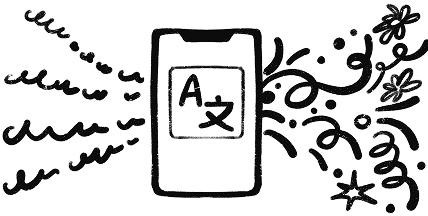
It does not translate “Milky Way” as such, but honestly produces “Milk Road.” And suddenly the stellar spiral turns into a pastoral landscape, where one can almost hear sheep bleating and the clinking of a milk can filled with fresh milk. And melancholy (“the blues”) takes the form of “dark blue feelings,” acquiring color and depth — as if emotions could be poured into test tubes and their gradients studied. At once it becomes clear: this person’s depression is not clinical but watercolor — curable by a change of palette.
If you want to generate a masterpiece yourself, try playing “Chinese whispers” with artificial intelligence. Send it any poem and ask it to translate, say, from English into Chinese, then into Arabic, then into Swahili, and back into English. You will receive a new semantic configuration in which only a vague sense of déjà vu remains of the original. Who, then, owns the authorship of such a text? The human who formulated the prompt, or the neural network that unexpectedly produced new poetry? Most likely, this can be called a form of co-authorship for a new era.
Zen and the Art of Operating Household Appliances
The next example is devoted to a gallery of conceptual artifacts, also known as “household appliance manuals.” A pragmatic text, once passed through the sieve of electronic translation—or an overly inspired human one—loses its utilitarian meaning and acquires metaphysical depth. It becomes a collection of Zen koans for domestic use.
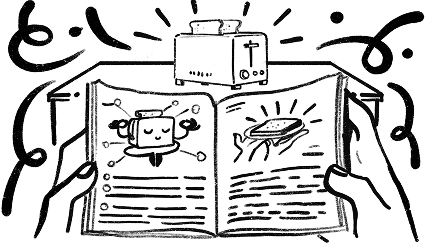
“For an airy taste, do not touch the water inside” (from a multicooker manual). Profound. Do not interfere with the process; let the universe cook dinner. “In case of smoke, disconnect the device from life” — a poetic euphemism for catastrophe, worthy of a philosophical treatise. And the instruction to “let the machine rest in a vertical position” conjures images of meditative practices among kitchen utensils. A toaster in the lotus pose, bread as an offering to enlightened objects. Perhaps they really do know something.
These phrases deserve to be framed and exhibited in a museum of contemporary art. They make one wonder: perhaps household appliances equipped with such manuals are already complete art objects, inviting us not merely to use them, but to reflect on transience, calm, and the correct position in space.
Menu Curiosities: When Literal Translation Changes the Taste of a Dish
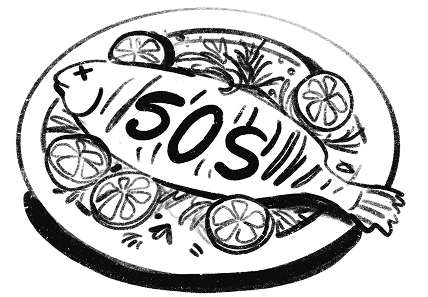
No less poetry can be found in tourist menus. A colleague who visited Poland shared the following discovery: “Fish — distress signal.” After some thought, it became clear that this referred to whitefish (Coregonus). Yet the image of a sinking ship broadcasting a desperate “S.O.S. — Fish!” will remain forever in memory as an example of culinary extremity.
The global collection also includes such gems as “Sweat from a pig’s ears” (intended to mean sweet pig ears, but suggesting the pig’s strenuous perspiration) or the legend of the dessert tiramisu (from Italian tiramisù — “pick me up”), which in one hotel was presented as “Lift me up.” Suddenly, creamy sweetness turned into an urgent cry for help—or even an elevator instruction—adding an existential note to dinner.
VHS Folklore: When One Man from a Small Town Spoke for All of Hollywood
And now let us sing an ode to the golden age of creative anarchy — the era of pirated voice-over dubbing. It was a form of folk theater performed by a single actor, where the creator (often a night owl with a cup of cold coffee) was both Shakespeare and the entire royal court at once.
The atmosphere is impossible to replicate. A chair creaks offscreen, tape rustles, and a deep, steady voice — without changing its intonation — delivers the lines of the brutal hero, his beloved, and a talking dog alike. Monotony became a new kind of dramaturgy: hypnotic and epic.
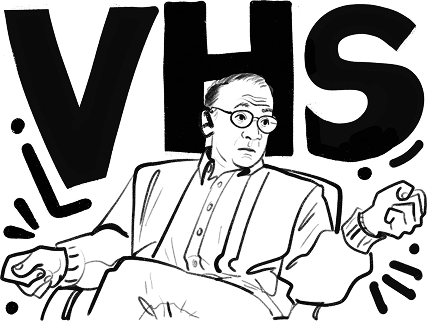
Idioms collapsed. Sherlock Holmes in Victorian London would turn to Watson and say, “Man, you’re on fire!” It was an act of instant, shameless adoption of Western plots into the translator’s own speech habits.
The soundtrack, complete with background coughs and ringing phones, is ready-made sound art, documenting the creative process in real time. And, of course, the legends: “Avada Kedavra” turned into “Avada Kadabra!” — a magical kick rather than a spell — adding physical conviction to wizardry. A similar carnival of creative chaos existed everywhere, from Indian pirate tapes to African VHS copies.
The Theory of the Happy Mistake
So why do these blunders touch us so deeply, while flawless texts provoke nothing more than a respectful yawn?
In our view, there are several reasons. First, the rebellion of chance. In our polished, predictable world, an error appears as a tiny act of freedom. This Dadaist gesture reminds us that language is a living, breathing, occasionally sloppy substance. All those absurd expressions resemble a crossword puzzle that invented itself solely to be solved.
Second, a workout for the brain. Our minds, spoiled by ready-made meanings, adore a sudden exercise. Encountering “Fish — distress signal,” the brain begins, with delighted crackling, to build bridges across the abyss of nonsense.
Third, the exposure of hidden connections. Error reveals the materiality of the word. “Milk Road” forces us to see the milk inside the galaxy. It shakes the dust of habit from concepts, returning them to their primordial, almost mythological imagery.
It is precisely here, in these gaps and glitches, that the wild, intoxicating, and truly elemental nature of language resides. As we enter an era in which neural networks translate flawlessly, blandly, and without a soul, these crooked, sincere artifacts become the last witnesses to the human (and machine) spirit within language.
The main secret, perhaps, is that complete understanding kills wonder: where logic fades, poetry is born. In this eternal and fertile gap lies our good fortune. The difficulties of translation leave room for a “milk road” in the night sky, for the command to “disconnect from life” issued by a wheezing kettle, for the chance, in the middle of a workday, to suddenly burst into laughter at how clumsily and brilliantly we have all messed things up.
Your thought is a big bang of ideas. Our journal is its source.
Thank you!