Category: Materialization technologies
The Curse of “Later”: Why We Postpone the Most Important Things
“Thus conscience does make cowards of us all,
And thus the native hue of resolution
Is sicklied o’er with the pale cast of thought,
And enterprises of great pitch and moment
With this regard their currents turn awry,
And lose the name of action”
Hamlet by W. Shakespeare
I have great respect for deadlines. They are always written in red marker on a magnetic board and linger somewhere on the periphery of my consciousness. They’re like a splinter that won’t let you rest—aching, demanding action. But it’s precisely the action that I always postpone. Even the most important tasks.
In high school I always showed up to exams with dark circles under my eyes. The same traces of sleepless nights remain with me now, because I tend to start working only when there are just two or three steps left before the deadline.
There is some kind of twisted pleasure in this. I am willing to do anything: clean the apartment, read books, endlessly play video games—anything to avoid actually starting the task. My grandmother thinks it’s laziness. My psychologist says it’s procrastination. He searches for causes in burnout and depression, but I’ve always given in to procrastination, along with the guilt and the sense of inadequacy that come with it.
And what upsets me most isn’t even the race against deadlines, but those important things that have no clear deadline at all. Or no deadline whatsoever. I postpone those too, and with them my whole life gets pushed to later.
During yet another episode, I put all my tasks aside and tried to figure out why this happens and what to do about it. The first fact didn’t bring any surprises: it turns out procrastination is connected to poor time management just slightly more than not at all. In a 2013 study, British psychologists Fuschia M. Sirois and Timothy A. Pychyl confidently shifted all blame from time management to a malfunction in emotional regulation. In their view, procrastination is a way to avoid discomfort here and now, even at the cost of amplifying that discomfort in the future. Well, nothing unexpected—but a reason to keep digging.
How It Works: Temporal Motivation Theory and Neurobiology
Then I came across a study by Piers Steel. This simple Canadian guy formulated the Temporal Motivation Theory back in 2007 and even proposed an elegant formula that supposedly explains everything.
Here it is: Motivation = Value*Expectancy / Impulsiveness*Delay to Reward.
Simple math: the less you believe in your own abilities and the success of the task, and the further away the reward for the work is, the more likely you are to give in to impulse and go get a tiny momentary pleasure instead. And it’s not even your conscious choice. It’s a rational—though essentially destructive—choice made by your brain.
Everything important requires time and effort. But a cat? You pet it, it purrs—right here and now you both win.

But back to the brain. From a neurobiological point of view, procrastination is a constant tug-of-war between the limbic system and the prefrontal cortex. When tasks are mentioned, the area responsible reacts instantly: fear, pleasure, avoidance of pain. That’s the protest of the part of us that strives to live easily and joyfully. The other part of us is like a strict planner, responsible for self-control, long-term thinking, and decision-making. Usually this planner is exhausted by stress and fatigue, so the limbic system easily seizes control—and suddenly you’re holding your smartphone, with an endless stream of cat reels flowing nonstop.
In chronic procrastinators like me, the amygdala also sides with the limbic system. Its job is to process threats: if the functional connection with the prefrontal cortex is weakened, any task triggers an avoidance protocol.
The more complex the task, the louder the sirens of the amygdala howl, and our smart, ergonomic brain hides in a bunker cozily labeled “later.” From this perspective, procrastination is an indicator of an internal conflict between avoiding discomfort and seeking meaningfulness.
The good news is that the brain is neuroplastic even in adults. Regular practices can strengthen the prefrontal cortex and reduce the hyperactivity of the amygdala.
What to do? Stop scolding yourself—it lowers stress levels. Start tasks through micro-actions: the limbic system will forgive you two minutes. Meditate and try not to postpone until tomorrow what can be done today.
Ego-Distance: Tomorrow Will Be Another Me
And on the other hand—why not? I’m not actually postponing tasks; I’m delegating them to a more responsible, disciplined, and energetic person—my “tomorrow self.” He is smarter than me by a whole day, rested and ready for battle. He’ll definitely manage!
This approach is called ego-distance. Sounds wonderful—if you forget that in the reality given to us through perception, the concept of tomorrow is ephemeral, and the Augean stables of postponed tasks will have to be cleaned out by me, not by some mythical hero with unlimited capabilities.
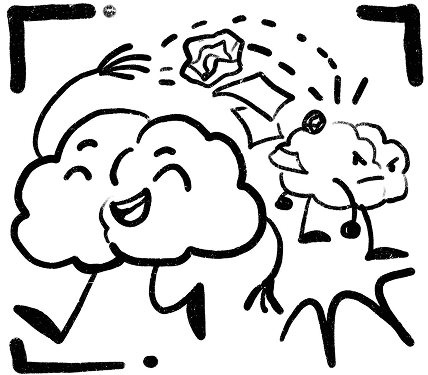
And even if we do slip into a split—what has my tomorrow self ever done to deserve being so shamelessly set up? And where does this temporal personality split even come from?
Again, the brain is to blame. Neuroimaging shows: when thinking about the “tomorrow me,” the brain activates the same areas as when thinking about another person. We don’t feel sorry for a stranger, and I’m in my little house—even if it’s called procrastination—but it’s bright, safe, and no flies bite here.
In fact, ego-distance is self-sabotage. After simmering this fact together with my treacherous brain, I sat down to write a letter from the future. I imagined the fury and frustration with which I would greet the next day and, without mincing words, explained to myself the whole truth. After an hour of carefree distractions I reread it. At least the prepositions in the letter were printable…
Understanding the principles of ego-distance gives a chance to overcome temporal fragmentation and stop using the insidious “later” as a way to avoid meeting who we are with who we want to be. To throw existential anxiety overboard and finally do something for our future self.
It’s simple: if you want to be awesome—be awesome now. Don’t hand this pleasure to your three-weeks-from-now self—he’s just as much of a coward and a scatterbrain as you, and he will definitely postpone everything. And “later” is the most dangerous word in the language. Because the correct way to read it is—“never.”
The Two Horsemen of Procrastination
There are two more agents of enemy intelligence who push us into the embrace of doing nothing. Their names are perfectionism and fear of failure.
The first one is all in white, with a noble Roman profile and a laurel wreath of a triumphant. In his right hand he holds the scourge of self-criticism with a heavy bronze tip. That’s what I get hit with on all protruding body parts whenever I try to start something. For a perfectionist there is only one way—to do everything flawlessly, without a single mistake, without the tiniest blot or slightest inaccuracy. This turns simple tasks into impossible ones, and impossible ones into chthonic horror.

The only way to avoid making a mistake is known to everyone—do nothing at all! And you can even stick your nose up with the air of a village snob, explaining to the world that you are striving for an unattainable ideal and nothing will make you deviate from that path. Some trusting listeners applaud and feel deep respect.
The second agent—fear of failure—is the spiritual brother of the first. He is soft-hearted, always ready to dab some antiseptic on the fresh wounds from the self-criticism scourge and cover the sore ego with a plantain leaf. While doing this, he slyly whispers simple truths: “This is hard, you’re not ready yet, you won’t succeed, you need to rest.” He whispers and whispers and whispers, spreading melancholy, and then opens his wide eyes and presses with the cold stare of a gun barrel until I roll down into the ravine of procrastination.
This is roughly what affective forecasting looks like—the flawed estimation of the task’s difficulty and the level of discomfort involved in completing it. Difficulties were invented precisely so that we would overestimate them.
Replaying difficult situations in my head, I always thickened the dark colors. And only with age came the understanding: everything is always simpler.
And then I began shouting in the face of perfectionism: “Hey you, with the nose—it’s normal to make mistakes!”, and then shoving away the timid one, because I had already handled tasks before and I don’t need chronic stress from constant postponing. You just need to start, and in 10 minutes everything will be fine. Or not—but at least I’ll try.
How to Escape the Trap?
After losing a third chess game in a row to my cat, I realized that I was now procrastinating not from tasks, but from the very research on procrastination. But how do you return to work when you don’t want to? Is there a recipe? Turns out—there is, and not just one.
The first method is to pull the brain over to the bright side of the Force. Make an unbreakable pact with yourself that you will work for just 5 minutes, and afterwards you may drop everything without a hint of guilt. How does it work? The short time frame neutralizes the anxiety of anticipated discomfort, allows you to work poorly, and lets you test the task’s strength.
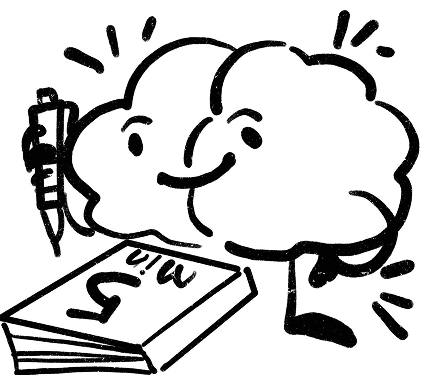
As for the fact that I was supposed to work for only 5 minutes—I remembered that half an hour later. And all because the brain is usually afraid to start, but once it enters into a dialogue with the task, it won’t leave—like a chatty neighbor—until it finishes.
The second method is called the Pomodoro Technique. If 5 minutes is too little to get you into the process, and the deadline is already snapping at your heels, you need to change tactics: renegotiate your deal with yourself. Now you set a timer for 20 minutes, and afterwards you may rest for a full five. If necessary, repeat the cycle and follow it to complete victory.
20–30 minutes is the optimal time for focused attention, and a set structure of work and rest is a powerful blow to anxiety. For fun, you can count how many cycles you needed to complete a task and then tell your boss:
“Okay. I’ll solve this in three tomatoes.”
Just make sure to clarify what you mean. Otherwise there is a risk you’ll get your salary paid in red vegetables by the crate.
The third method is self-compassion. Three pillars support your calm: kindness to yourself, a sense of shared humanity, and mindfulness. Accept the inevitability of mistakes, do not judge yourself, encourage yourself. Say: “What a wonderful grown-up, trying his best. Well done.” Lean on the shoulders of titans and dwarfs alike: everything that happens to you has already happened to others. They managed, and so will you. Acknowledge reality. Tell yourself: “It’s hard, sad, and scary. But everything passes. This will pass too.” Just avoid dramatic wrist-twisting and head-banging against the wall.
The fourth method is external obligations. This one is simple: from childhood we are taught to keep our word, and therefore the brain perceives potential reputational damage very seriously. Under the pressure of social expectations, the brain will firmly sacrifice comfort just to live up to another person’s trust.
Announce publicly that you will complete your short list of current tasks by Friday—or that you’ll crow like a rooster three times under the table. A strong surge of motivation will overtake you instantly, unless you’re a professional imitator of domestic poultry sounds.
The fifth method is ritual. This belongs to the “Secrets of Creative People for 300” category. Every second writer has their own ritual: someone walks around the desk ten times, someone drinks a mug of goat milk, someone stands on their head. By repeating the same action before work, you train your brain like academician Pavlov trained his poor dogs. This makes life much easier: perform the ritual and you’re already in the flow.
I wonder whether Anonymous Procrastinators meetings exist. “Hello, I’m Seryozha and I put everything off until later. My goal is to earn a chip for a week of abstinence from procrastination. And after laughing for just ten minutes, I fixed the kitchen faucet and crossed off one more item from the magnetic board.”
Put Later Off Until Later…
Finishing the research, I realized that procrastination is a complex phenomenon—a thousand-faced antihero with a million sticky tentacles. Yet there is meaning in it. Sometimes procrastination is an indicator of fatigue, and it’s enough simply to rest for it to fade away. You can just allow yourself to stretch your tired legs toward the fireplace, drink a cup of tea, and chat with your cat about the works of Albert Camus.
The main thing is not to get carried away. Because while waiting for inspiration by the river of procrastination, you may see the corpse of the person you wanted to become floating by.
According to the Big Bang Theory, the Great Explosion of discoveries starts right now.
Thank you!