Category: Global minds
"We’re Not Afraid to Stay Small." Global Confession of the Visionaries in Hospitality Yekaterina Rodygina and Alexander Karpov
They say technology is erasing everything human. Now, they say, it’s coming for the restaurant business: robots will cook, neural networks will take orders, and establishments will be reduced to a simple transaction—walk in, eat, leave. They also say that having a “soul” in business is a metaphor from the last century.
But there are places where automation isn’t about getting rid of people, but about giving them time for something else: for a conversation, for a smile, for remembering a regular by name and preparing their favorite drink.
Kaliningrad has such a place—the warm kitchen of a northern country, the café Vaffel. There, they bake their waffles on custom-made irons, cast in China for their own production. They don’t inflate their prices, because they know the cost of every ingredient and the value of a guest’s gratitude. They have their standardized recipes, but they also have a chat log where they’ve documented a personalized recipe for a customer who lives just down the street.
We didn’t come here looking for a business case study. We were curious about something else: in an age where everything is measured against pragmatic standards, automated, and optimized, how do you preserve what can’t be reduced to an algorithm? How do you work with a generation that doesn’t want to commit to a five-day workweek? How do you stay true to yourself when the pressure to grow is immense? And what does an establishment look like when its core technology isn’t developed in a workshop, but conceived in the mind?
In this interview, we talked about waffles, but also about why a powerful national brand can fail while a small local café endures. We talked about how the hardest part of the restaurant business is learning to switch off and set priorities. And we talked about how technology doesn’t have to make us soulless. Sometimes, it simply gives us the time to be human.
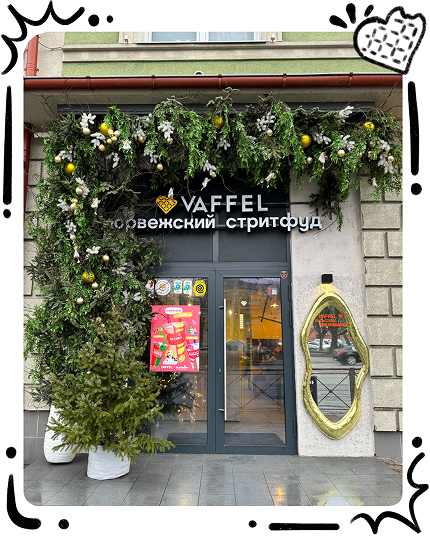
Answering the editors’ questions were Yekaterina Rodygina, Operations Director of Vaffel, and Alexander Karpov, the café’s General Manager.
— Yekaterina, Alexander, let’s start at the beginning. In Kaliningrad’s city center, where new cafés seem to sprout from the asphalt, you decided to open a franchise. Whose idea was that?

— The idea came from Anna Valeryevna—she’s our owner, the main inspiration. We’re all in this together, so in this conversation, we represent her interests too. Her thoughts are our thoughts.
People usually buy into a franchise when they have no experience in the restaurant business. Anna Valeryevna simply wanted to create a beautiful business for the soul. Any business should bring joy; money is more of a pleasant bonus.
Before this, I worked in St. Petersburg, traveled across the country opening franchise locations, and came here to my hometown on a business trip. Anna Valeryevna and I talked, and I decided to stay. That’s how Vaffel came to be.
— You have a very cozy atmosphere.

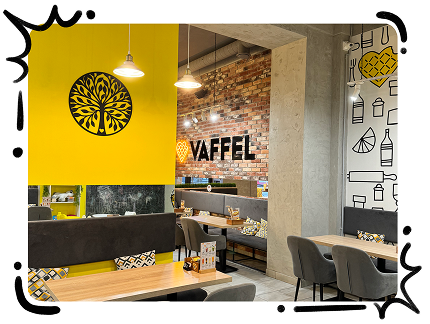
— Thank you. We searched for a long time for the right space. Then Anna Valeryevna came across an old pharmacy. The place was gray and had been empty for two years, which is why nobody wanted it. We took it and turned it into something great. We even did the renovation ourselves, with our own hands. We had just put together our first team, and those employees helped us with everything: we laid the tiles together, painted the walls, carried the equipment. Unfortunately, we didn’t end up working with those guys for very long, but at that moment, their support meant the world to us. That’s something you can’t put a price on.
— But why waffles?
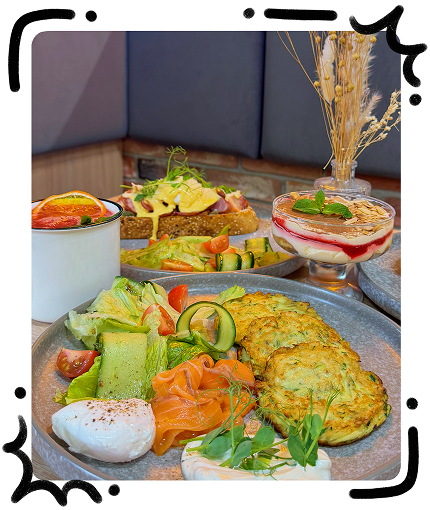
— Any establishment needs its own story, good intentions, a clean soul, and something that others don’t have. Norwegian waffles are almost nowhere to be found. We make everything ourselves: the dough, the preparations—all from simple, home-style ingredients. That’s why our waffles are unique, photogenic—you want to eat them and photograph them without stopping. And they’re shaped like hearts! Waffles are also practical: you can take one home, reheat it, and it tastes as if it were just made. They’re perfect for delivery.
— Do you see yourselves more as fast food, or as a place where people linger?

— Take classic fast food, like Vkusno i Tochka—it’s about product and speed. People go there for the food, not the interior, and certainly not for emotions. They go for the product. And that’s an incredibly tough niche to break into. McDonald’s built its concept over decades, and nobody has been able to outdo it. Burger King and KFC entered the market, but McDonald’s remains the leader.
What matters more to us is different. Of course, we care about taste, but for us, it’s just as important to exchange emotions and hospitality, to create a cozy service experience, and to genuinely share our soul. That’s why our staff interacts sincerely with guests. If someone comes to us just for the money, they’re not a fit. We want to give warmth and then get recharged by that warmth from people in return. I suppose this is our path, and we’re walking it.

— People have become more closed off these days, each in their own little world. We want people to come to us and feel that it’s different here—that here, you come first, that everyone is welcome.
— Still, the restaurant business has always been rich with rivalry. Some see competition as a problem, others as an opportunity. What do you see?

— This is a problem with any market. When competition grows, an entrepreneur has to adapt, because consumers have a choice: if they don’t like it here, they’ll go somewhere else.

— Honestly, this makes me furious about the hospitality industry. People come into this business thinking: “I want my own restaurant. I’ll do a beautiful design, a menu, hire some chefs—and that’s it. Full houses, money flowing like a river.” They don’t read anything, they don’t study. But showing respect for the business means doing your homework.
That approach doesn’t work in this industry. The number of expense categories is huge, and so are the points of control. You can have a perfect interior, a great location, and high foot traffic, but if the chefs are incompetent or the chicken tastes bad, it’s over. Maybe you’re short-staffed, and customers leave because of poor service. Sometimes all the servers are great, but one bad apple can turn everyone away. Even a faulty ventilation system can ruin everything. A guest’s return depends on the smallest details.
— In our city, about ten new places open every month. Then three or four of them close. Maybe forty percent are living less happily than they’d hoped. And we all forget about risks. The pandemic was a good lesson—a lot of restaurants simply disappeared.
Kaliningrad is a tourist city, but right now the flow of visitors is lower than it was two years ago. In winter, it’s almost nonexistent. People open up thinking: “It’s a tourist city, it’ll be great, we’ll make money.” Then they find themselves in the thick of competition, creating it for each other—and that’s where the story ends. Take, for example, someone wanting to start a sushi delivery service. They don’t study the pricing, they don’t look at who’s already operating nearby, they don’t analyze the market niche. Hardly anyone pays attention to their signage, their entrance, their hygiene. And that’s a whole other topic—sanitary standards. We were surprised to learn how many don’t follow them. And yet these places have customers. But isn’t that disrespectful to the people eating there? Why do these establishments even allow themselves to keep serving food? Then you sit there and think: if they’ve been open this long and people still come, does that make it acceptable?

— Where does that come from? I’ll say it again: there are very few professionals left. Few people want to learn, to invest in themselves, to grow, to be perfectionists. Even reading something important for your profession—studying, developing—has become rare. The market is starving for real professionals.
But in this business, you can’t do without professionalism and constant learning. What do we work with? People’s health. Just recently, at a sanitation training session, we were reminded that many diseases have an incubation period of a month, sometimes up to six months. When something happens, you might never figure out where it came from or why. Yet those places keep operating. They just go on and on.
— In many professions, people already feel like technology is edging them out. In the restaurant business, it’s also possible: robot chefs, automated dispensers, AI managers. Does that scare you?

— I’ve been in the restaurant business for 14 years now, and I know one thing for sure: life has a way of putting everything in its place. Any field demands constant self-improvement. The world changes, trends change. When people get sick of eating out of troughs, out of dumpsters, out of vending machines, they’ll say: “Give me that waffle for three hundred rubles—let me feel like a human being again.” That’s when the return to quality will happen, because our emotions and our real desire for care, for being part of something good, they haven’t gone anywhere.
So I believe people will tire of the soulless and will come back to places where they’re genuinely welcomed and met with warmth.
— I noticed your team is very young, even though the restaurant business is complex and demands experience. How does that work?

— I think we just clicked as people. It turned out that our front-of-house team has been with us for over a year now. At first, we had turnover—people were coming and going—but once we gathered a team of professionals, everything fell into place. Our kitchen team is more experienced; the chefs came in, looked at our recipe cards, refined them, improved them, and made everything even better than we’d hoped.

— And now, from the guest feedback we’re getting, we know this is what we were aiming for. When I first started in the restaurant business seven years ago, I noticed people would stay in one place for three, sometimes four years. Now, if an employee lasts a year somewhere, it’s almost unusual. I used to jump around myself every couple of months, looking for the next place. So we’ve got something to compare it to, and we’re glad we found our people—those who stay and who genuinely care.
— They say young people don’t want to work: they want flexible hours and minimal responsibility. For you, is that a whim or just the new normal?
— Of course, there will always be moments of adjustment, but I think you just need to listen properly and work with those moments. If someone thinks a certain way, there’s a reason behind it. You have to dig a little: what’s going on in their life, what are they living for, why did they come to this job? Maybe they have three kids and are renting, barely making ends meet. Maybe they’re saving for a phone or an apartment. Everyone’s needs are different.
— Unfortunately—or maybe fortunately—we can afford to take an individual approach with everyone. As long as we have no more than thirty employees, that’s possible, and we’re learning to do it.
— Famous restaurateurs often say that servers are salespeople, machines for increasing the average check. But if we’re saying a server is a friend, then they have to be genuine. Can you be both at once?
— The server is the most important person in the house. Everything starts with them, everything depends on them—they’re the first point of contact with the guest. That’s how I explain it to our team: this is your place, guests have come to see you. How will you welcome them?
I worked as a server myself for many years, but I’m not a salesperson. I can sell something if I know for sure it’s delicious. And maybe that’s why our servers sell well: we have a good average check, people come back. Our team has really come to feel that our product is genuinely good, and they share what they themselves love. They get a 50 percent discount on everything on the menu, so they can try it all. And on their days off, they often spend time here because they like it.
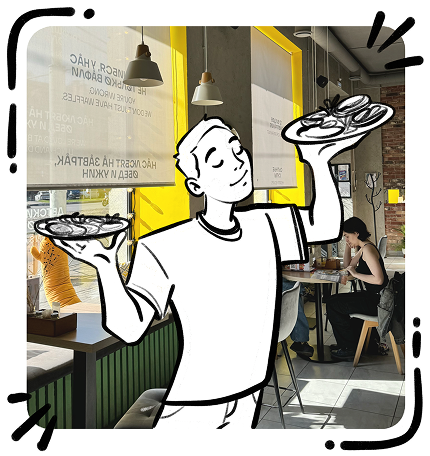
— In chain restaurants, everything is standardized: the same plates, the same forks, the same dishes. You do the opposite.
— I think it comes down to offering what we ourselves love. For example, we have a lot of different tableware—we like that touch. It’s how we move away from standards toward individuality. If we practice an individual approach to guests, then the tableware should be different too. We buy what we like, and then we bring it out specially for a guest, depending on their mood.
Many of the dishes on the menu are also our personal favorites. Anna Valeryevna loves eggplant salad, so we added it to the menu. I love chocolate cake—we refined it and added that too. That’s how, by the way, our smoked cheese salad came about. I used to eat it all the time in St. Petersburg and suggested we make it here. We share with guests what we ourselves love, and people can feel that.
— Is that where the little scarf on the cup comes from too?
— Yes. It all comes down to the small details. We came up with the idea of tying a sweet little scarf around the cup—it’s so pleasant to look at, to hold in your hands. A guest can enjoy both the drink and the aesthetics.

— Every story has its heroes. Some are remembered for their deeds, others for their habits. Do you have a guest you’ll definitely write into your story?
— Of course. For example, there’s a guest who lives just nearby. One time, he asked us to make him a drink and add ingredients from another drink. We did. Another time, he asked for a drink made from different ingredients, then again and again—it became a ritual. But because the ingredients kept changing, so did the price. And he started to get upset: why was it different every time?
So we sat down with him, calculated everything, negotiated a bit, and settled on a single fixed price for his drinks. We wrote it up in our team chat, pinned it, with notes: how to address the guest, how to ring up the drink, how to serve it. After that, he would stop by almost every day for his drink, and he brought friends along too.
You might think, is it worth overhauling your whole system for one person? But we talked it through, and we did it.

— We have regulars on delivery orders too. We recognize them by the comments on their orders, so we always throw in something small, something nice, to thank them for choosing us. In a big operation, that would be hard to pull off—the system just works differently. But we’re a small café, we can afford to be flexible: to do things a little differently, to show our appreciation in our own way, to surprise people.
— We also have a regular guest, a young student. We often work with universities, giving them gift certificates for various events. One student came to us with one of those certificates and liked it. Now he comes here about once a month and says, “I got my scholarship, I want to spend it here.” He likes our place, and he’s also an incredibly open, sociable guy, so he asked us for a stack of flyers. He hands them out at the university and brings his friends along. It’s like word-of-mouth marketing, but live.
We really don’t have any limits. Want off-site catering? No problem. Once, we were asked to help with food and drinks for a child’s birthday party because the birthday girl loved our bubble tea. We came, ran a masterclass—something we never have on our menu—gave the kids waffles and nuggets, set up a table outside, and it turned into a real celebration.
We also work with a charity foundation called “Belief in a Miracle.” Every three months, we go out to children and run a free waffle-making masterclass. We also cater large events, and there, we have no limits at all: we work to order. If a guest wants quesadillas, we make quesadillas. If they want tartlets, we make tartlets. For us, the main thing is that the person leaves happy.

— Every endeavor has its purpose. What is the mission of your establishment?
— To make people happy, cliché as it sounds. Right now, we’re in the middle of a small business restructuring, and we want to formulate a new, clear mission—one we can put up on the walls of the café, so everyone who walks in can see what we’re here for.
To put it simply: to give warmth and a smile. The product is certainly important, but what’s even more important is that the guest leaves satisfied.
— How do you know when a guest leaves satisfied?
— From the simplest things: if they come back to us again, if they leave a review, if they leave a tip. Sometimes, you can tell just from the tone of their “goodbye”—their mood, how they walk out. You can feel it.
— But reviews come in all kinds, don’t they?

— Absolutely. We were just talking about food bloggers recently. It’s no secret that there’s a trend now: half of their content is paid for—someone pays, they talk. How can you trust that? Where’s the truth?
That’s the problem with any advertising. When someone speaks because they’ve been paid, there’s always a risk the real truth stays behind the scenes. But if a blogger cares about their reputation, they won’t lie. The question is how long they’ve been building that reputation and what they’re willing to sacrifice for it.
— But feedback is still important, isn’t it?

— It’s very important for the staff. Especially for the guys in the kitchen—they don’t see the dining room, they don’t see the guests. So they don’t always know what we’re doing all this for. And when we get those moments, when someone sends us warm words—that’s the most valuable thing there is. We drop the reviews into our group chat, so everyone, kitchen and front of house, can read them. And they do. They sit at home and smile. Because that’s real. It’s something someone wanted to share. Not for money, but from the heart.
— Some entrepreneurs want to take over the world. How much does that sound like you?

— I’d like to say that Yekaterina and I are modest. Maybe we’re just being realistic. We had two other projects: a food truck and a place by the sea in Pionersky. We tried it, we played around with it for one summer, then a second, and we realized: now’s not the time. When you spread yourself across three projects, you lose focus. So we decided to put all our energy into one project, but to do it as well as we possibly could. The owner supported us, and here we are—a year later, touch wood—still going strong.

— This is the mistake a lot of chains make. They start expanding, quality drops, control weakens. Individuality gets absorbed into a system, but the system doesn’t work the way it should. Better to have one location with a soul, where everything’s under control, where people know us by sight, where we can walk up to a guest and ask, “Did you enjoy it?”
— And hear an honest answer.
— If we imagine meeting here in ten years, what will this place be like?

— In the restaurant business, ten years is a long time for one project if you stick to a single concept. You always have to change things, refresh them—maybe not radically, but you have to add something new, because trends change. It’s like a book: if you don’t read it, it gathers dust. And we’d all just be sitting in that dust, in the same walls, with the same renovation, with a menu that never changes. Guests would lose interest, because they’ve already tried everything. So we have to keep moving—without losing ourselves, but without standing still either.
— You said it’s impossible to plan 5 to 10 years ahead now. So how do you build a strategy?

— We depend on the city, on tourist traffic. We all see what’s happening in Sochi, or in Dubai.

— Before, we could plan 5 to 10 years ahead. Now we live one day at a time. It’s not a negative thing, necessarily—it’s just how things are. Who could have predicted the pandemic? No one. But the whole country shut down for months.
— But we got through it. People got through it. And that gave us a lot of strength, it turned everything around 180 degrees. So now, we really don’t know what comes next. If things go well, we’ll introduce new dishes, change the interior a bit, maybe redo the entrance. Maybe we’ll change the name, maybe we won’t. We have to move with the times, adapt to people, to the market, to the situation, keep an eye on trends.
For example, we were among the first in the city to offer bubble tea. Not the basic version that had been around for ages, but our own version—a twist. I came back from a business trip and said, “Guys, why is everyone in Russia drinking bubble tea since 2018, and here in Kaliningrad we don’t have it? Let’s just make a tasty lemonade, add our own flair, our own names.” And we did. I think we make some of the best bubble tea in the city. But when you think about it, what is bubble tea? Water with syrup and juice-filled pearls. But we were flexible, and people appreciated it.
— Let’s talk about identity. If someone walks down the street with a Starbucks cup, it signals they value quality. If they’re holding a can of Red Bull, they’re on the go. There are products that become markers. Do you give people a reason to say something about themselves too?
— Yes—we want people to carry our cups like something of their own. But a brand isn’t a magic wand you can just bring in and sell. It’s long, painstaking work. In Russia, there’s PIMS—a coffee alternative—that’s exactly that kind of brand. People walk around with PIMS cups and show them off: look, I’m drinking PIMS, I’m in the know. And that’s fine.
In Kaliningrad, PIMS opened and then closed. Why? Because they came in just for the money. They didn’t adapt their established concept to the region. The location was odd, the place itself was confusing, the pricing was unexplained. There was no interior, no atmosphere, none of that “ideal formula” they talk about.

— When we heard they were opening, we were worried. It’s a strong national brand—they have collaborations with Mark Marlowe, with “Naked Hearts,” events in Dubai, racing partnerships, their own clothing line. In Moscow and St. Petersburg, people literally stand in line for their drinks. We were sure they’d be serious competition.
In the end, there was no competition at all. Because they came without a story, without a soul. Just a logo. And a logo with nothing behind it doesn’t work.
— Since we’re talking about drinks, tell us the secret: how do your signature creations come to life?
— In 2015, I came across a collection of the world’s most beautiful cocktails. There was a blue drink with a little fish in it. I loved it—it stuck with me—and I always looked for a chance to make something like it. About a year and a half ago, we came up with a good recipe, added pearls, little stones, sea-themed details, put a fish in there, and named it “Finding Nemo.” So we got our own blue drink with a fish, and that summer it became our bestseller.
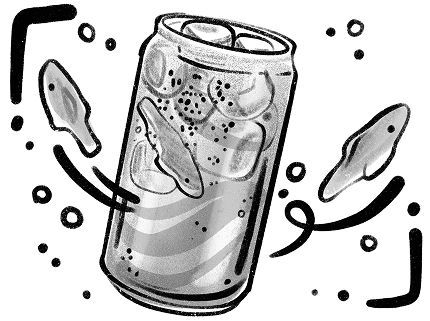
— I liked it too.

— It is tasty. But people also appreciate it for the presentation. Gerda, I know you also liked the “Scrooge McDuck” drink.
— Yes.

— That one started when I saw these little goose figurines somewhere. I thought, we need a drink we can build around these funny figures. We have geese everywhere—they’re associated with us. We’re fun, it’s just fun.
Then there’s the “Say Meow” drink. Our supplier sent us marshmallows shaped like cat paws instead of the regular ones. I looked at them and thought, I’m not sending these back—we’ll make a drink with them instead. So another tasty cocktail was born. I know there’s nothing else like it in the city, but we have it.
— They say in the restaurant business it’s impossible to learn how to rest, because the place only lives as long as you’re pouring yourself into it. How do you take a break from waffles, from staff, from guests?

— This is something you have to learn. I used to be a workaholic, until at some point I realized it was just an endless loop—working without days off, no family, nothing else.
I set myself a schedule: five days on, two days off. From 10 in the morning until 7 in the evening, I’m at work. The rest of the time, I’m with myself. I got a dog, and that helped a lot—like it or not, you have to walk them. Before, I’d be at work until 10 or 11 at night. Now, at 7 in the evening, I head home and we go for a walk. I met some other women at the dog park, and we spend a few hours there—and on those walks, I just switch off completely. I joined a gym, started going to workouts.
When you start having another life—friends, a dog, hobbies—you realize things have fallen into place: here’s work, and here’s home. And it feels comfortable. You start to fill up with energy, because now you have somewhere to get it from.
You have to put yourself first. When you’re replenished, you have something to give to others—and the results are better. When you’re stressed, it shows, in you and in everyone around you.
— Yekaterina, which is your favorite waffle?
— That’s hard to answer. Let’s go with the “Country” waffle with egg. We added it to the menu once, then took it off, then decided to bring it back—to revive it. Waffles aren’t really my personal thing, but I love that they’re made from natural ingredients, by hand. I love the way the dough is mixed, how it all makes its way to the guest, how the waffles come out hot—poured, baked, assembled, served. It’s great. Even if I want to eat something different myself, I know this one is real.
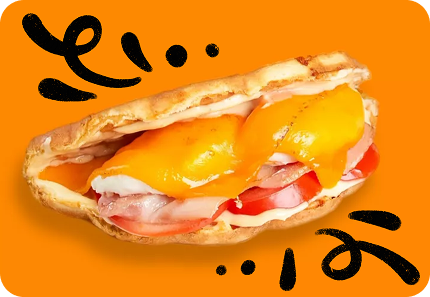
— And what kind of waffle would you say the Vaffel café itself is most like?
— Probably the “Legend of Norway” waffle with salmon—just as legendary and popular. You step inside, you eat the waffle, and you realize there’s a little secret hidden here.
— And what is that secret?
— There isn’t one. Maybe just love for what we do. Everything we make is from simple ingredients: flour, eggs, salt, milk. The franchise suggested we switch to dry, pre-made mix—it would have made things easier—but we said no right away. We want to give people a natural product.
The only secret is our waffle irons. They were cast in China specifically for our production. I suppose that’s our little signature touch. Everything else is ordinary—just put together with care.
— You can tell the story of a business with numbers. Let’s try telling the story of yours with images—a few associations that capture its essence.
— Of course. First, there’s universality. It shows in everything. We don’t have just one type of guest. Even kids come running to us for bubble tea. Universality also shows in our menu: we have soups, salads—a little bit of everything. We listen to what our guests need.
The second association is care. We don’t have rules that limit our guests; we almost never say “no.” Even if something is out of stock, we’ll suggest something else.
Third—originality, uniqueness. We love those special touches, those little things that make us different.
Fourth is accessibility. I spent a long time learning the management side of things. I know how many suppliers we have—about forty. We choose the best in terms of price and quality. When I walk into the café, I can roughly tell which supplier something came from and how much it cost. Because for me, it’s important that prices are fair. We don’t inflate our prices; we set them based on the market. Overcharging is disrespectful to the guest. People should know what they’re paying for. And we try to make sure they get even more than what they paid for.
And there’s a lot our own staff came up with. The gloves for the waffles, for example—that was the servers’ idea. They pack the gloves into little bags themselves and give them out to guests. The cats in the window—that was the servers’ idea too. Now the whole city comes to take pictures with them. We change up our entrance as well: before, guests were greeted by the Grinch, Alice in Wonderland.
That’s how we live. Little details. Emotions. The things that light us up.
— There are things you only notice when you work with people every day. What have you learned about people over this time?
— That’s a difficult question. I rarely feel disappointed in our guests. Of course, there are negative moments—when someone smiles at you, then leaves and writes an angry review. In St. Petersburg, where I worked for a long time, that’s not how it’s done. There, people ask for the manager and sort things out on the spot. Here, unfortunately, it happens. But it’s a very small percentage. Most people are sincere, kind, responsive—so conflicts rarely happen.
Once, we had a serious incident with a woman. She was upset about something and started shouting. The place was full, but all the other guests understood she was in the wrong. When we said goodbye to her, they started applauding. Two weeks later, she came back and apologized. She said she’d been in a bad mood. We became friends, and now she’s one of our most loyal, kind regulars.
That’s why I always tell people: if something’s wrong, say it right away. I think people become loyal when they realize there’s no boundary between them and the place. That the people working here are just ordinary people, with the same lives, problems, dreams, ambitions.
We just do our work. And people can tell when it’s done with heart. And that, I think, is the main thing I’ve learned: heart always comes back to you—in a smile, a tip, or just a quiet “thank you” on the way out.
What are people like? All kinds. But every one of us, sometimes, could use a kind word. Or a waffle.
We scatter the fog of guesses with the beam of scientific truth.
Thank you!