Category: Materialization technologies
The chemistry of stress: why everyone takes adaptogens
“Calm is the new currency of our time”
modern aphorism
Disclaimer. This article is a science-focused overview, not medical advice. The editorial team at The Global Technology is not a medical institution. Any decisions about starting, stopping, or changing medications or supplements should be made with a qualified healthcare professional who understands your individual situation. Self-medication can be dangerous.
Morning, 2026. The local café smells less like fresh coffee and more like a secret potion workshop. Friends gather for what can only be described as a “vitamin brunch.” One rattles a bottle with a label brighter than a neon sign. Another spills out capsules that look like tiny gems from a fantasy garden.
“Ooh, you’re on the ‘sunshine’ stack today? Ashwagandha plus magnesium? Bold move.”
“Yesterday’s deadline demanded a sleep sacrifice until 3 a.m. You?”
“Presenting to the CEO at 10:00 sharp. I’m running on theanine espresso — keeps the focus sharp and the knees from knocking.”
Somehow, we’ve managed to move our nervous systems — originally designed for peaceful cave life — into a buzzing concrete hive. According to the APA Stress in America 2025 report: 62% of adults cite societal division as a major stress source, 69% say they lack emotional support, and half regularly feel isolated, abandoned, or lonely.
Chronic stress has become our second job. And we’re hunting for relief in little bottles with names that sound like spells from an alchemy fanfic: adaptogens, nootropics, chelated minerals.
But do these trendy potions actually work? Or is it just an elegant way to fool ourselves?
Let’s break down how they mess with the two main players: cortisol (your internal alarm system) and GABA (your built-in chill pill).
Public Enemy №1 and Your Inner Chill Pill: Cortisol vs. GABA
Let’s rewind to the caveman era. Imagine our guy hears a rustle in the bushes. Brain hits the panic button, and the adrenal glands roll cortisol onto the stage. Its mission? Noble: mobilize every resource for survival. Liver dumps glucose, heart rate spikes, body primes for fight or flight. Perfect for a tiger in ambush mode.
But in modern life, the “rustle in the bushes” happens every five minutes: Slack channels, traffic jams, doomscrolling. Cortisol stays stuck in the ON position, slowly draining us dry — fatigue, insomnia, belly fat, a immune system that’s basically waving a white flag.

Enter the counterweight: GABA (gamma-aminobutyric acid). Think of it as the velvet-voiced friend who whispers, “Chill out, it’s just the wind.” This inhibitory neurotransmitter dials down excessive excitement, shutting off mental loops and anxious chaos. GABA is the cooling system, the fire extinguisher on your brain’s factory floor. Without it, you’d melt down by minute two of any Zoom meeting.
In an ideal world, cortisol ignites and GABA extinguishes. Clean, simple, efficient.
In reality? Most of us are running on a GABA system that’s worn out as an old AC unit during a heatwave. And right there — in that fragile balance between these two systems — is where the whole “smart supplement” science lives.
Pharmacology for the Lazy: How Does This Stuff Actually Work?
Let’s meet the security team in your brain’s headquarters. We’ve rounded up the supplements that actually do something — backed by recent research, not just vibes.
1. Ashwagandha
This root gently taps cortisol on the shoulder and says, “Maybe dial it down a notch.” It lowers your brain’s sensitivity to stress signals, so not every little thing feels like the end of the world. Perfect for anyone who still replaying that awkward conversation with the barista from three days ago. (You know the one — he skimped on the oat milk.)
2. Rhodiola Rosea
Meet your energy accountant. Rhodiola stops stress from burning through your internal resources like a drunken sailor with a credit card. It improves how neurons transport ATP — those tiny energy molecules that keep everything running. Translation: every breath and every bite of food actually fuels you instead of just passing through. Ideal for the chronically fried, the deeply apathetic, anyone whose energy levels rival a nature documentary about moss.
3. L-Theanine
This amino acid from green tea waltzes straight into your brain and boosts GABA levels, triggering alpha brainwaves — the same ones that appear during meditation or when you’re lost in a pleasant daydream. You’re relaxed and focused. Not sleepy, not anxious. Just… right. That’s why good tea calms without knocking you out. Pair it with caffeine, and magic happens: you’re alert, but your hands aren’t shaking like a chihuahua in an elevator.
4. Magnesium (Glycinate Form)
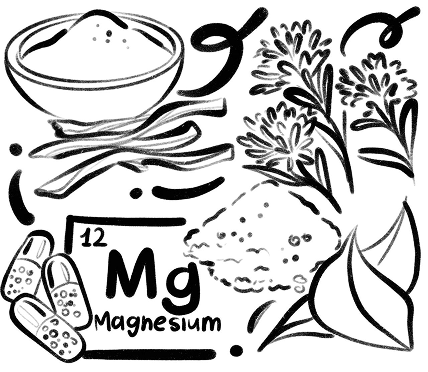
Magnesium is nature’s gentle bouncer for NMDA receptors — the ones responsible for neuronal excitement. This mineral plays a role in hundreds of bodily reactions, but its superpower? Stopping your brain from throwing a full-scale panic festival. Stress flushes magnesium out through your kidneys. Low magnesium makes stress worse. It’s the perfect vicious cycle — and glycinate is the form that actually gets where it needs to go without, well, digestive drama.
What “Smart” Supplements Actually Do
Let’s be real: there’s no magic pill. There’s only a well-stocked brain first-aid kit. “Smart” supplements don’t replace your life — they just patch up the biochemical wiring so you can live it.
Think of them as three distinct squads:
Squad 1: Emergency Response & Triage (L-Theanine, Magnesium)
These are your on-the-spot fixers. When your throat goes fuzzy before a big call and your heart tries to escape through your ear — this squad steps in. Fast. Effective. Situational. They don’t solve your life; they just stop you from unraveling mid-sentence.
Squad 2: The Rebuild Crew (Ashwagandha, Rhodiola)
These are your training wheels for recovery. They create a quiet harbor where your stress-crushed nervous system can finally catch its breath and start repairing itself. A 1–2 month course is basically a spa retreat for your adrenal glands. No drama. Just slow, steady rebuilding.
Squad 3: Foundation Patchers (Magnesium, again)
Our soil, water, and food have gotten stingy with minerals. Stress? It gnaws through your magnesium reserves like a hungry hamster through a grain bag. These supplements just plug the holes so your whole fortress doesn’t collapse at the first draft.
Bottom line: supplements don’t fix you. They just give your nervous system a fighting chance to fix itself — right here in the middle of our concrete-and-pixel jungle.
The Dark Side of Pill Paradise — or, a Spoonful of Tar in the Herbal Balm
Here’s where things get real.
Behind all that biochemical elegance lurks a serious risk: the “quick fix” culture, where a capsule becomes a substitute for actually dealing with your life.
Picture this: toxic job, five hours of sleep, haven’t seen sunlight in a week. To cope, you pop some ashwagandha. The anxiety fades. You tolerate the intolerable. Problem solved? Not even close.
Supplements become noise-canceling headphones — they don’t make the world quieter, they just mute your ability to hear it. And sometimes that noise carries vital information: “This job is destroying me.” “This relationship is toxic.” “I need to rest.”

So step one: build the damn foundation. Sleep 7–9 hours. Move your body outside. Eat food that isn’t just fast and processed. Talk to humans. Do a digital detox, even just for evenings.
Skip that, and any supplement is just building a skyscraper on a swamp.
Only with that base in place can you use supplements tactically — for acute moments, like the raw edge of heartbreak. If you find yourself consistently wanting to pop a pill for the same person or the same situation? That’s a blinking neon sign pointing straight at a psychological adjustment.
Ask yourself, every single time: Am I taking this to become more resilient, more alive, more aware? Or just to make the cage more comfortable?
The Future Is Personalized Biochemistry
We’re slowly moving from blindly swallowing “nerve pills” to consciously managing our neurochemistry. Soon, checking cortisol or GABA levels might be as routine as checking your pulse after a run.
And then the choice gets precise: does my brain need magnesium to shut down the fear, or a walk in the park? Ashwagandha to calm down, or a therapist to rewire those anxious neural pathways?

“Smart” supplements don’t replace healthy living, therapy, or simple human joy — a conversation with a friend, a lazy Sunday, laughing until you snort. They’re just premium fuel and quality oil for our biological sports car, still running on Stone Age software.
The atomic fortress has fallen. And our hair stands on end!
Thank you!