Category: Cognitive technologies
The Wheel of Distortions: How Art Shapes Our Reality
“I never thought it was possible to laugh so hard while looking at myself in the mirror”
Heinrich Heine
He carried a table up to the roof. Covered it with a festive tablecloth, arranged exquisite dishes, placed candles in elegant candelabras, and filled crystal glasses with champagne. The evening played along: no wind, a huge moon hanging directly across from the table. All that was left was to turn on some light jazz to complete the perfect scene.
And then she arrived. In her perpetually worn jeans and hoodie, she plopped down on a chair, took a loud sip from her glass, and began poking at the salad with her fork, visibly bored. Neither the jazz, nor the moon, nor the trembling candlelight stirred her soul.
They sat on the rooftop, had dinner, and hid their awkwardness behind forced conversation.
This is not the opening of a romantic drama about clashing personalities. It’s an example of how the templates installed by mass culture can fail to align. A conversation about how, in the clash between Hollywood’s grand canons and the cozy conventions of romance novels, real people are the ones who lose.
Art has grown tired of being a mirror. Now it’s an engineer, redesigning reality with our own hands. A beautiful fiction from books and films is elevated to the status of an ideal, a benchmark. We use it in standard life situations, trying to replicate it, surpass it, improve it. Art absorbs this “upgrade” and, on its basis, creates a new beautiful fiction.
The “wheel of distortions” begins to spin. Reality cracks under its pressure, losing authenticity, depth, and awareness. One template overlays another; beauty enters life and makes it complicated, uncomfortable, and confusing. Against common sense and our own nature, we act as art dictates—forgetting that artistic fiction is no closer to an ideal than that enormous moon is to the little table on the rooftop where two people in love are quietly suffering.
What Is “Distortion” in Art?
In literature, there’s a rule: every word must serve the plot. Every detail must be in its place and solve a specific task, all of which ultimately lead to a single goal—conveying meaning. Under these conditions, no one aims for meticulous documentation of reality. The author seeks emotional response, depth, and impact.
Away with the boring and the ordinary—it’s not interesting, not necessary, not art. How many times did Harry Potter wash his hands, brush his teeth, or wander to the fridge at three in the morning? We don’t know. And we don’t want to.
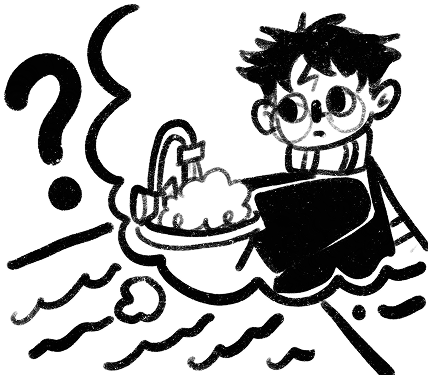
Feelings and aspirations, dreams and fears, suffering and happiness—this is what matters, and only this. It’s this mix of actions and emotions that the author spotlights, amplifies with talent, and sometimes shamelessly distorts and inflates beyond recognition. This is a sacrifice made in favor of artistic expressiveness. Without it, the book wouldn’t work.
Visual art distorts reality even more. Film runtime tightens the selection of details and facts. What’s important is magnified; what isn’t simply doesn’t make it into the frame. Perception is shaped not by description but by camera angles, lighting, music, color grading, and special effects. Through the magic of editing, all of this merges into a new, accelerated version of reality.
Before first love inflames our thoughts and feelings, we learn what love is from books and see how it looks on screens. There, love is fire and passion, heroic acts and grand gestures. It arrives instantly and lasts forever. Routine is omitted. The deeper essence of things is sacrificed for aesthetics and emotional intensity. You are expected to cry and rejoice, to fear and empathize, to believe what’s happening.
And everything is fine—as long as we remember the conventions of the author’s perspective, as long as we don’t take distortions as a model.
But we don’t remember.
How Do We Absorb Distortions?
In the mid-20th century, psychologist Albert Bandura proved that people learn not only through direct experience but also by observing others. From early childhood, we adopt behavioral models by watching parents, neighbors, and teachers. Later, fictional characters from series, games, and books join them—along with bloggers, musicians, and actors.
Neuroimaging studies show that the brain regions responsible for pain and joy activate not only when we experience them ourselves, but also when we observe them in others—even on a screen.
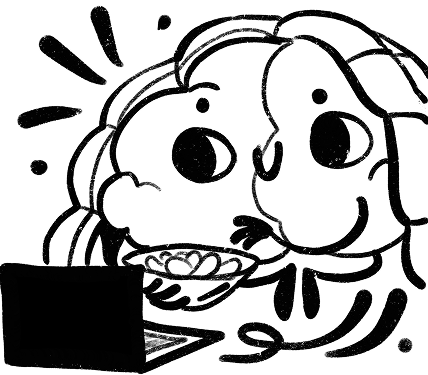
Art offers ready-made solutions for every aspect of life: relationships, careers, beliefs, family, identity crises. And the less personal experience a person has, the more firmly these media models take root.
They descend upon the unprotected mind wrapped in a soft blanket of empathy. The brain—evolutionarily tuned to remember “threats” and “rewards”—archives vivid, dramatic scenes as significant memories, placing them alongside already learned narrative patterns.
Thus, distorted artistic models seep into our consciousness, and we begin to perform roles. Shared templates spread across generations, and distortion gradually becomes a version of the norm.
Feedback Loop: Reality
This new norm becomes the measure against which we compare our feelings. And if our internal sense of love doesn’t reach the minimum threshold set by cinematic or literary love, we begin to stage it—raising it to the “standard” through words and actions.
A study published in Mass Communication and Society (2008) by Lori Knobloch and Nancy Mundorf showed that frequent viewing of romantic comedies leads to inflated expectations of partners and lower satisfaction in real relationships.
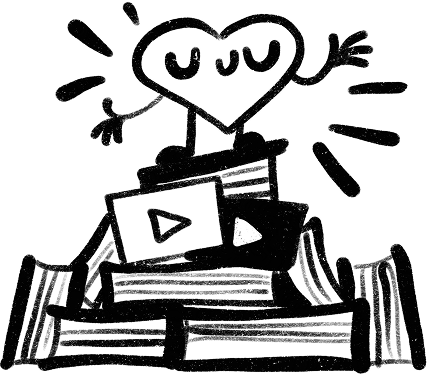
“In true love, there’s no room for conflict. You’re accepted as you are. Why torture someone when you can just find the perfect match?” Absorbing messages like these, people become more demanding and often lose the ability to resolve conflicts constructively.
Social media spins the “wheel of distortions” even faster.
Every day, through photos and short videos, we receive thousands of microdoses of staged success. To prevent rejection, users consciously construct “naturalness,” carefully planning and directing supposedly candid photos. We move from imitating life to imitating imitation itself.
Historical and Theoretical Context
The problem of replacing reality was first articulated by Plato. In The Republic, he describes people chained facing a wall, seeing only shadows cast by objects carried behind them. Shadows are all they know—the subject of their reasoning, hopes, and dreams. Free one prisoner, let him see the real world, and upon returning, he will be unable to convince the others that anything exists beyond shadows.
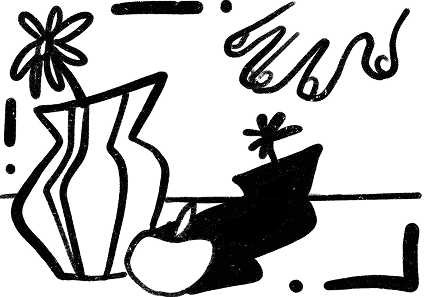
French philosopher Guy Debord, in The Society of the Spectacle, wrote: “Everything that was directly lived has moved away into representation.” As early as 1967, he argued that relationships between people had been replaced by relationships between images. We are all unwilling participants in the spectacle—both actors and spectators. What is not performed does not exist; what is performed feels false.
Jean Baudrillard went further in Simulacra and Simulation, introducing the concept of hyperreality—a state in which the copy not only replaces the original but renders it unnecessary. The moment when a vacation photo becomes more important than the vacation itself, because the audience’s delight outweighs your own experience.
Recommendation systems (TikTok, YouTube, Netflix) feed us pleasing content, building comfortable personalized caves where everyone sees only their own shadows. Algorithms seek engagement. We engage, share, ride trends, remix content, perform the role of active users, and fill the air with simulations and simulacra.
The Consequences of “the Wheel of Distortions”
If this has existed since antiquity and humanity survived, maybe there’s no need to worry? Only if you’re comfortable with anxiety, disappointment, and a crisis of meaning—thrown in as a bonus to distorted perception.
Artificial ideals promise love at first sight, instant success, a perfect family, a profitable business, miracles on demand—and a bucket of sweets on top. Life fails to match expectations, and suddenly you’re facing cognitive dissonance, chronic anxiety, depression, and difficulties in social interaction.
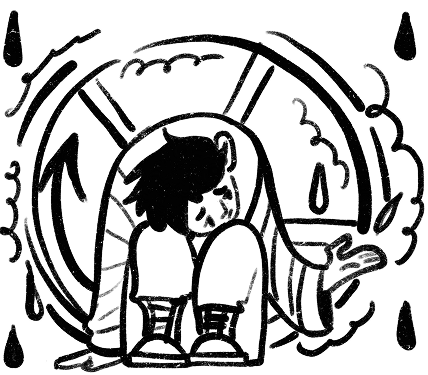
Constantly measuring ourselves against artistic standards, we lose the ability to feel genuinely and settle for emotional counterfeits—a theatrical performance of feelings. Teenagers raised on digital interaction, for example, struggle more with recognizing subtle emotional cues in live conversation: facial expressions, pauses, awkwardness.
At another turn of the wheel, art—losing stories about ambiguity, routine, silence, and small decisions—abandons a vast portion of human life and sides with algorithms and the market, turning culture into a closed loop of clichés.
How to Step Out of the Wheel
The first step toward freedom is learning to understand art by cynically dissecting it with the scalpel of critical analysis. It’s not difficult—just ask:
- Who created this content?
- What are their goals?
- What emotions are they trying to evoke—and why?
- What is omitted, simplified, exaggerated?
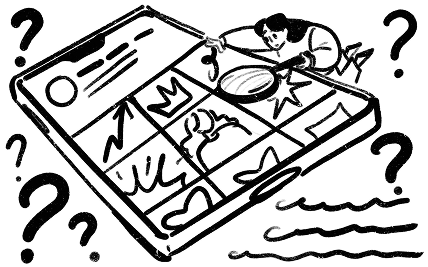
This idea underlies media and information literacy, which UNESCO has promoted since the 2000s as a core skill of the 21st century—the ability to love art without dissolving into it.
The second step is curating content that resists templates. Such art sobers you up like cold mineral water after too much alcohol. It cultivates a taste for complexity, gradually dulling the addiction to cultural fast food.
Good examples include:
— Documentary films, such as those by Frederick Wiseman—no music, no voice-over, no fictional characters.
— Literature of everyday life: Elena Ferrante, Rachel Cusk, Lyudmila Ulitskaya—authors who depict life without dramatic twists but with deep psychological truth.
— Independent games like Papers, Please, where choices are built on moral ambiguity and the evaluation of consequences.
The third step is to become an author yourself. Research in narrative psychology shows that people who can meaningfully tell their life stories—including failures, uncertainty, and absurd moments—have more stable identities and better mental health. You don’t need to write a novel; reflective journaling is enough.
This final step leads to awareness: understanding which role you’re trying to play in the society of the spectacle, and consciously rejecting simulacra and staged emotions.
Art is neutral. Its purpose is to reflect on life—not to idealize it.
A Dialogue with Art
Let’s return to the rooftop. With the author’s omnipotence, remove the template table, music, and candles. Instead, set up a small tent, throw in a cozy blanket, a thermos of tea, and a backpack full of cookies. What happens next is up to the lovers. They might bring a clichéd telescope and gaze at the stars. They might listen to the sounds of the night in silence. They might talk until morning about books—or watch a movie.
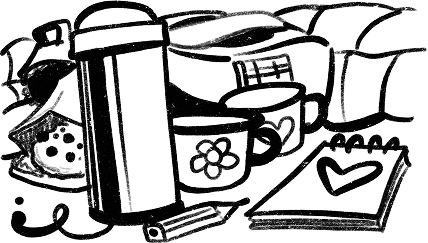
It’s their choice. And it doesn’t matter how much it’s shaped by distortions, as long as both are content.
Awareness and critical thinking are not meant to stop the “wheel of distortions.” They can only slow it down, give you time to decide whether you want to repeat a cliché or act on your own terms.
True freedom lies in the ability to dialogue with art without losing yourself—understanding how, where, and why distortions appear, consciously borrowing some things and rejecting others.
Art is a way to see through someone else’s eyes, feel someone else’s pain, live a fragment of another life. Art is beautiful and neutral. How we use it is our choice—and that means the “wheel of distortions” spins by our own hands.
The atomic fortress has fallen. And our hair stands on end!
Thank you!