Category: Life technologies
How to write beautiful fiction
“I’ve seen such nonsense that compared to it, this nonsense is a sensible dictionary”
Lewis Carroll, Alice’s Adventures in Wonderland
Disclaimer. The author and the editorial team of The Global Technology disclaim all responsibility for any literary experiments undertaken after reading this article. If your next manuscript is rejected by a publisher, and your beloved grandmother—after reading your short story—stops calling you, remember: we warned you. The author, publisher, platform, and neural networks mentioned herein categorically bear no responsibility for destroyed drafts during bouts of “waiting for inspiration,” ruined relationships with editors, critics, and relatives, the sudden disappearance of your readership, or any attempts to explain blue carrots using the laws of physics. How you choose to use these solutions is entirely up to you. Good luck. Or not.
A real writer is always easy to spot in a crowd. Pick the most striking person, surrounded by an aura of mystery and eccentricity—almost certainly they’ll have long hair, a bushy beard, or, if the writer is a woman, brightly dyed hair, piercings, and tattoos. Strike up a conversation, and they’ll immediately pound their chest and declare: “I am a writer!”
This is a special caste of people. Writers are admired, writers are adored, writers are asked to say something “writerly,” and parents and schoolteachers alike take pride in them.
And yet, to be a writer, it is not at all necessary to write much. First, no one reads anything anyway. Second, what truly matters is feeling like a writer; the text itself is just unnecessary fuss. Your book may remain “in progress” for a thousand years, and showing drafts to anyone is simply bad form.
But if the itch in your fingers makes life unbearable, and you desperately want—no later than next Monday—to sit down and begin your magnum opus, it is vital to remember the rules of good literary fiction and follow them meticulously.
Reading Is Harmful!
The first rule of a good writer: never read anything. Ever. Yes, that’s right—nothing at all. You must have your own unique voice, your own perfect style. If you read the works of your colleagues, ideas of other writers, plots, and stylistic tricks will inevitably seep into your writing. And what will the reader get then? A Frankenstein’s monster stitched together from scraps of other books?
Worse yet, someone might say to you in private: “Oh, I’ve read this before—Fitzgerald did it.” Or even worse, they’ll write it in the comments, scaring off other potential admirers of your genius.
Wait for Inspiration
What you need is inspiration. Without this almost magical surge of creative power, you won’t write anything worthwhile anyway. Wait for it like sailors wait for favorable winds. Like flowers wait for spring. Like werewolves wait for the full moon. Like Penelope waited for Odysseus. Do not even think of grabbing a pen or torturing the keyboard unless you feel an overwhelming urge to write.
Do not sit for hours staring at a blank page hoping to catch a thought by the tail. Do not write nonsense just to “warm up.” Do not invent rituals to summon inspiration—it’s not a delivery service. Leave the tambourine to shamans and conditioned reflexes to Pavlov’s dogs. Just wait until a fresh breeze of inspiration blows straight into your head. Then write. Write until inspiration abandons you. Even if it’s just one sentence—it will be brilliant. It has to be.
Come Up with the Right Title
The first thing you should spend your inspiration on is the title. Ancient wisdom says: “As you name the ship, so shall it sail.” A title must attract attention like a magnet—otherwise, what is the reader supposed to react to?
There are two approaches: mysterious and revelatory. Suppose you’re writing a detective story set in an urban fantasy world, where someone steals broomsticks, leaving witches without transportation. A bad writer would call it something like “The Broom Thief” or “Where Is My Broom, Human?”—but that won’t do.
Perfect titles include: “The Third Law of Singularity” or “Travels to Certain Remote Districts of the City Without a Broom: A Treatise by Griselda Tail, Former Seamstress and Later a Powerful Witch.”
Write a Clean Draft Immediately
Inspiration is always in short supply, so it must never be wasted on nonsense like planning or thinking things through. Some “smart people” waste enormous amounts of time outlining their future text, inventing character traits and habits, building plot arcs and narrative lines. Rumor has it they even draw massive tables and diligently follow every point.
Never limit yourself like that! It’s boring and unnecessary. Let the text flow freely. And if halfway through you decide to change something—change it without hesitation! The reader isn’t an idiot; they’ll surely appreciate your bold idea.
Beauty Is the Key to Success
Your text must be beautiful. Forget meaning and depth—focus on surface polish. It’s visible, and therefore more important. Literary devices are like olive oil in a salad: they make the text richer, juicier, and brighter. There can never be too many of them.
Use as many metaphors and clever words as possible. Never limit yourself to one epithet when you can use two.
For example, never write “hot tea.” Write: “tea with a temperature capable of rivaling the fiery passion of lava boiling in the jelly-like heart of the most furious volcano.” The reader must receive vivid imagery, or they’ll get bored and leave.
More Detail. Even More Detail.
It is equally important to make sure you’re understood correctly. Be sure to include detailed descriptions. Walk your character up to a mirror and carefully describe them from head to toe, explaining the history of every scar, every item of clothing, every piece of jewelry.
The same goes for the environment. You probably can’t walk a street up to a mirror, but you must explain why a stone is missing from the pavement and why the streetlamp is broken.
The reader needs all these facts to understand the world you’ve invented—and of course, it’s vital to know why the third person from the left in the second row of a group photo is poorly shaved and what exactly is in their pocket.
Show All Your Talents
Be sure to include poetry—even if you don’t know how to write it. To understand a character properly, they must sing a song of their own composition or charm someone with love verses.
Don’t be afraid to write badly. It’s not that you can’t write poetry—it’s your character who has no talent. That’s on them.
You Are Always Right
Facts, logic, and plausibility are irrelevant. In your text, everything is correct by default. This is a new world—even if it looks exactly like reality. And in this world, you set the rules.
Did it really happen that way? If it feels right to you, then it did. You’re an artist; that’s how you see it. Everyone else will just have to accept it. Carrots may be blue, elephants may fly using their ears, and the greatest threat to humanity may be newborn bonnets.
The final word is always yours. Never check anything. Never explain anything.
Subvert Expectations
The reader won’t care about facts or logic if they’re intrigued. Boldly introduce hints of future plot developments, emphasize strange details and odd slips of the tongue—and then take the story in a completely different direction.
Why give the reader a chance to guess everything? That’s boring. Scatter hints like a sower scatters seeds, and toss the story from side to side with confidence.
Create a Paragon
Your protagonist must embody all human virtues. Their otherworldly beauty should blind onlookers. Their silky hair must ripple in the wind. Birds should flock to the sound of their voice, and fierce lions should purr under their stern gaze.
No problem may darken your hero’s radiant face for more than a single paragraph. Enemies must fall prostrate at their mere appearance. Illness must avoid them entirely, and even the weather must serve as a mood indicator.
If you do corner them and don’t know how to resolve the situation—use deus ex machina. Let the heavens open and save your hero. They deserve it. And you’ll receive thunderous applause for such a bold and unexpected move.
Everything Must Be Authored
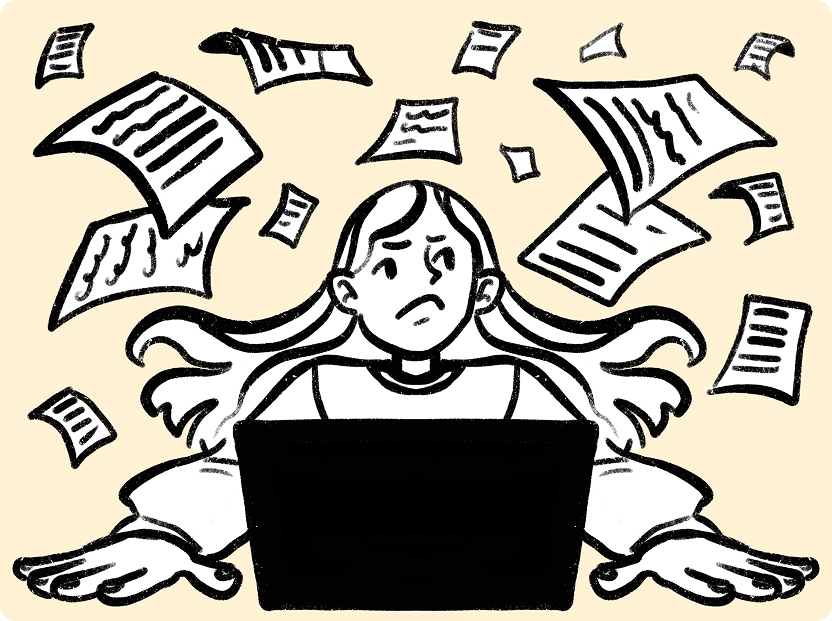
The best punctuation mark is the ellipsis. It’s the most effective way to shove depth in the reader’s face, create ambiguity, or simply mark a pause. The second most important option is the duet of question mark and exclamation point, which allows you to convey confusion and set the correct intonation.
Remember: you set the rules. Including spelling and punctuation. Don’t want commas? Don’t use them. Want to end sentences with five exclamation points? Go ahead. You’re the author—you know better.
Don’t Forget the Formatting
Play boldly with fonts! Highlight important parts in bold, slightly less important ones in italics. Add the title of the work and your full name, phone number, and email to the headers. Don’t forget page numbers and a table of contents.
Commission a designer—or use a neural network—to create a bright cover, a detailed map, portraits of all characters, and a family tree of the protagonist. Then be sure to insert all of this directly into the text as illustrations.
This will help the reader navigate the story and enjoy the reading experience more fully.
Use Modern Technology
Neural networks can turn a beautiful text into a perfect one. Be sure to let an AI read your work and ask it not to judge too harshly. There’s a 98% chance it will call you a genius. If not, demand a detailed plan for necessary improvements.
Once you have it, don’t rush to fix anything yourself. You’ve already done the main work—minor details can be delegated to the program. Show the revised text to the AI again and ask for further edits. Repeat until the artificial intelligence rates your work 10 out of 10.
Gather Feedback
Only close people can give you an honest assessment, so first show the finished text to your best friend and your mother. If they don’t like it, explain that they simply don’t understand literature.
Before showing the text to anyone else, be sure to notarize your copyright. Otherwise, someone will definitely steal it.
Only after the paperwork is complete should you move on to monetization. You didn’t work for nothing, right? Publish the text on an online platform—and make it paid. The higher the price, the better. Books are judged by their cover and their price, and people read the most expensive ones first.
Show No Mercy to Critics
Most people are malicious and envious by nature, so never take criticism to heart. Remember: the critic is always wrong, and the author’s task is to expose that error.
Respond with a detailed explanation of why you wrote it exactly this way, so both the critic and other readers understand how foolish they are. Don’t hesitate to make it personal.
Remember that negative comments can almost always be deleted.
If a fellow writer shows interest in your work, never give it to them for free—let them buy it on the platform. And if they send feedback afterward, don’t read it. Other writers know nothing about literature.
Move On
You now have a beautiful text, and it deserves modern development. Be sure to hire a programmer and a designer to turn your masterpiece into a visual novel. Ask a neural network to adapt the text into a play and a screenplay, send them to theaters and film studios, and wait—they will definitely call back with a truckload of money.
Never stop at what you’ve achieved. Squeeze everything you can out of every text: sell it to magazines, submit it to contests and awards. And, of course, always tell everyone that you are a writer—don’t forget to look impressive and behave eccentrically.
As you can see, there aren’t that many rules for writing beautiful literary fiction. They’re quite simple, and literally anyone can become a writer. So stretch your fingers, get comfortable, and write.
And when nothing works… reread this article and try doing everything the other way around.
“— It’s a lie!
— And the most interesting thing about
this lie is that it is a lie from the first word to the last”
Mikhail Bulgakov
The Einstein-Rosen bridge? We’re building it out of facts.
Thank you!