Category: Cognitive technologies
How to Win Any Argument
If you want to have the last word in an argument,
say to your opponent: “Perhaps you’re right.”
Winston Churchill
Is arguing a noble pursuit? Hardly. All it really takes to start an argument is ironclad confidence in your own correctness, a healthy dose of stubbornness, and an opponent who—imagine the audacity—dares to challenge your opinion and insist on theirs. What follows is an intellectual street fight with no rules: sharp one-liners, profanity, appeals to unnamed experts, and an urgent demand for dueling pistols.
Under the barrage of emotions, steel cables of self-control snap one by one. Fists clench on their own. Vocal cords creak like poorly oiled door hinges. And suddenly you’re ready to do anything to win—while the long-forgotten truth quietly cries in the corner.
So, is it possible to win any argument? Yes. It is.
But first, let’s define our terms. What does “winning” actually mean? Is it defending your position, finding a solution, and keeping both your reputation and your nerves intact? Or is it proving, at any cost, that there are only two opinions: yours—and the wrong one?
The second option is for those who argue for the sake of arguing. It’s the destructive path of the sophists, cheerfully proving that the Sun isn’t yellow, Achilles will never catch the tortoise, and that everyone gets to invent their own truth.
The first path? That one’s for everyone else.
So, to win any argument, you’ll need a cool head, solid facts, the ability to listen and actually hear, and a talent for compromise and balanced decisions. It’s not quite as simple as Newton’s binomial—but it’s worth a closer look.
Ronaldo or Messi?
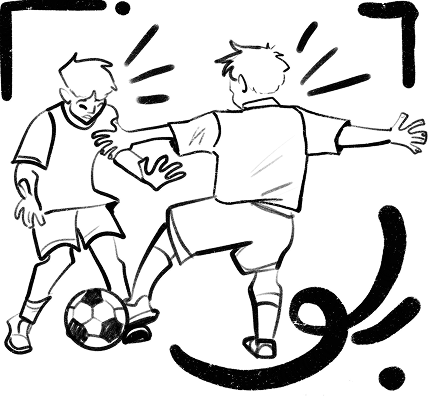
The two young players meet on a neighborhood soccer pitch. One is dressed in the proud colors of Real Madrid. The other wears the no-less-proud colors of Barcelona. A silent pause—and then…
1. They both twist their faces, gulp air, and launch into an endless debate about whose idol plays better. A shouting match—and possibly a scuffle—is only minutes away.
2. They remember that they came to play football and go on to play a few matches together with other guys.
We choose the second option. Because the first step toward winning any argument is deciding whether it’s worth having at all. Supporting different teams is perfectly normal. Trying to prove that one player is better than another instead of playing the game is simply a bad call.
Someone on the Internet Is Wrong Again
Somewhere in the vast wilderness of the internet, you stumble upon a person confidently arguing that the Earth is flat, global warming doesn’t exist, and numerology is a real science.
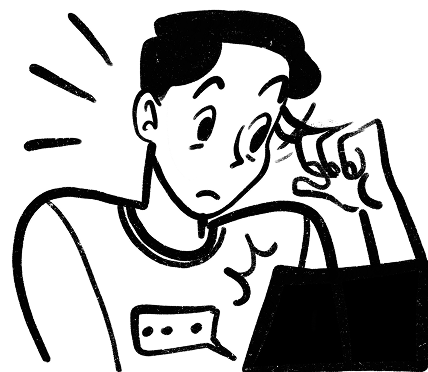
1. You fire off an angry rebuttal. They reply, citing the unbiased opinion of the Anunnaki. You write back again, gradually heating up to a white-hot rage fueled by ignored facts and smug mockery.
2. You politely ask why they think that way. You weigh their arguments and either enter a discussion—if the person seems reasonable—or decide not to continue the debate.
3. You tap your temple with a finger, close the tab, and move on with your life.
Sometimes, winning means walking away. Especially online, where trolls of every imaginable size are just waiting for a chance to knock you off balance. Keep your composure. Don’t feed the trolls.
The Jackhammer Man
In the apartment above yours lives a supervillain—the Jackhammer Man. Judging by the soul-rattling, tooth-loosening noise, he’s chosen an ambitious interior design concept and plans to decorate his walls with approximately one billion holes. The goal is surely noble, and the man is clearly persistent: he drills from dawn till dusk. Something must be done. But what?
1. Burning with righteous fury, you storm upstairs and pound on the door like a discount Batman, ready to restore peace and justice. The neighbor barely opens the door before you unleash a torrent of complaints, accusations, and threats. Naturally, he snaps back—and thus begins a lifelong saga worthy of the Montagues and Capulets.
2. You go upstairs during a quiet period. Even though the neighbor opens the door holding the dreaded jackhammer, you stay calm. You politely ask him to comply with noise regulations and respect the law.
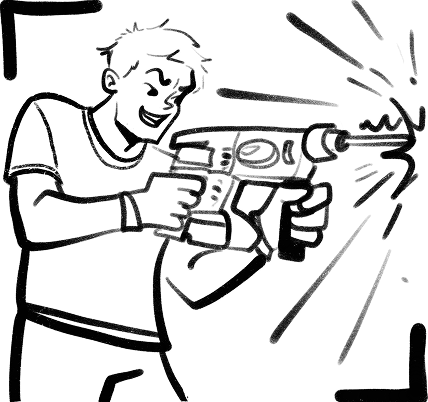
In the second case, your chances of negotiating civilized wall-destruction hours are about 80%. Because you’re focusing on solutions, not accusations. And if you’re unlucky enough to have a truly unreasonable neighbor, then the dispute is best handled through official channels.
Office Tyranny
The calm of the office is shattered by a nine-out-of-ten annual report. Tasks pour in like water from a broken hydrant, and another stack of folders lands on your desk. Your boss hints that all of this should have been done yesterday. You feel an overwhelming urge to smash a keyboard over their head, grab some fishing bait, and disappear into the wilderness.
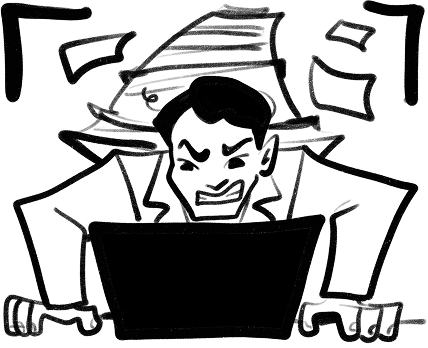
1. You take a deep breath. You swallow your cold coffee (if there’s any left). You agree to take on the task—but immediately clarify that with the current workload, it won’t be possible to do everything both quickly and well. You ask which tasks are the priority and set realistic deadlines.
2. You glance meaningfully at the keyboard, assess your boss’s weight class and athletic ability, and snap angrily: “This is impossible! Do you even realize how much work this is?!”
In the second scenario, you become the problem. In the first, you become the solution. It may sound obvious—or unbelievable—but working together against a problem is far more effective than escalating tension and fueling conflict.
Today It’s Your Turn!
Living together is a brutal stress test. For a thousand years, romantic Titanics have been crashing into this iceberg all over the world—and here it is again. You come home from work to find a mountain of dirty dishes in the sink, and the smell from the trash can reaches all the way to the hallway.
1. Outrage! You immediately raise your voice and demand answers. And answers you will get—rest assured. Thirty minutes, an hour, an eternity later (circle one), the floor is littered with shards of broken dishes, mascara is running, and someone is officially declared a cold, heartless monster.
2. You call in the most ruthless weapon in existence—facts. Avoiding personal attacks and keeping your emotions in check, you calmly and politely (after all, you live together for a reason—maybe even love?) point out that you’ve been doing the dishes and taking out the trash all month, and that it’s time to agree on a division of chores or set up a rotation.
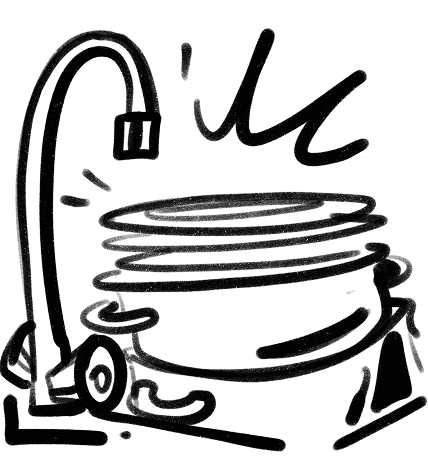
Resentment vs. domestic harmony. Emotional roller coasters vs. a cozy evening together. The choice is yours—and only yours.
Today It’s My Turn!
No sooner have you dodged one iceberg than another emerges from the fog. A comfy couch, good food, candles everywhere, the scent of rose oil—you both want a pleasant movie night. What could possibly go wrong?
“Today it’s my turn,” your partner announces, turning on Twilight. And of course, you were mentally prepared to once again hear young Skywalker scream after his rapid DNA test.
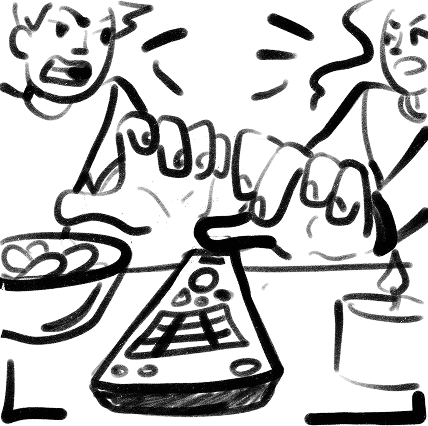
1. Now you shout the sacred “NOOOOOOO!” and snatch the remote. The evening is ruined, the candles are blown out, and you fall asleep right there on the couch in the company of your “stupid” Jedi.
2. You ask whether it might be possible to find a compromise and watch something you’d both enjoy. And when you’re gently—or not so gently—refused, you agree that next time you choose the movie. Even if it turns out to be Twilight: Part Two.
Sometimes the best way to win an argument is to pause, accept someone else’s right to the remote—and their right to an opinion.
The Children’s Uprising
Your child has rebelled: lying across the doorway, issuing an ultimatum, and refusing to go to kindergarten or school. Time is ticking. You can practically feel your boss dialing your number—and then…
1. Who cares what they want? Get up and go—because I’m older, I’m in charge, and I brought you into this world, so I’ll send you to school! Emotional pressure and threats always work. The child sobs, breaking your heart, shoulders an impossibly heavy backpack, and disappears into the crowd without even waving goodbye.
2. You sit down next to them and ask what’s wrong. And when your child starts talking, you actually listen. When the confession ends, you work together to create a plan to deal with the problems at hand.

In any argument, it helps to listen to the other side, identify the root of the issue, and get to the heart of the matter. Your arguments become sharper—and you won’t have to strain your voice.
Hell’s Kitchen
Your grandmother is visiting. And she’s not just visiting—she’s actively sharing wisdom accumulated over a thousand years. You’re peeling the potatoes wrong. Cutting them wrong. And frying them very wrong.
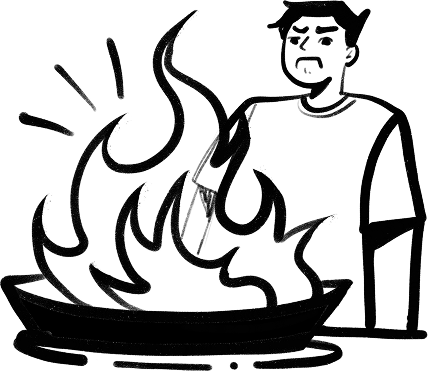
1. You decide to try the antique method of cooking a simple dish. Who knows—maybe Grandma has four Michelin stars hidden under her pillow? You allow yourself just one liberty: a pinch of rosemary. Grandma is happy because she passed on her knowledge. You’re happy because it tastes great.
2. You ask her to keep her opinions to herself. It’s a different time now, you live differently, and you don’t need any moss-covered advice. And if someone wants to be clever, they can cook themselves!
You have to know how to admit when someone else is right—especially when, under the weight of arguments, logic, and expert opinion, you realize you were completely wrong. Yes, that too is a victory.
Bonus Round:
A checklist for winning any argument with cool elegance and flawless logic—leaving your opponent with nothing but intellectual embarrassment over their lack of restraint:
- Do I actually want to discuss this?
- Have I really listened to the other person?
- Am I talking about facts, or giving in to emotions or personal attacks?
- Are we trying to solve a shared problem?
- Am I ready to admit the other person might be right?
- Is it time to take a pause?
Argue wisely. Take care of your nerves—and your relationships. And now that you’ve professionally mastered the art of arguing, purely for practice, try asking a friend the most treacherous question of all: Who’s stronger—a lion or a crocodile?
We’ve discovered new laws of the Universe in your pocket. By the way, there are many forgotten things in the Universe too.
Thank you!