Category: Life technologies
How to Build Antibodies Against the Social Viruses "It's high Time" and "It's Too Late"
“Be yourself; everyone else is already taken”
Oscar Wilde
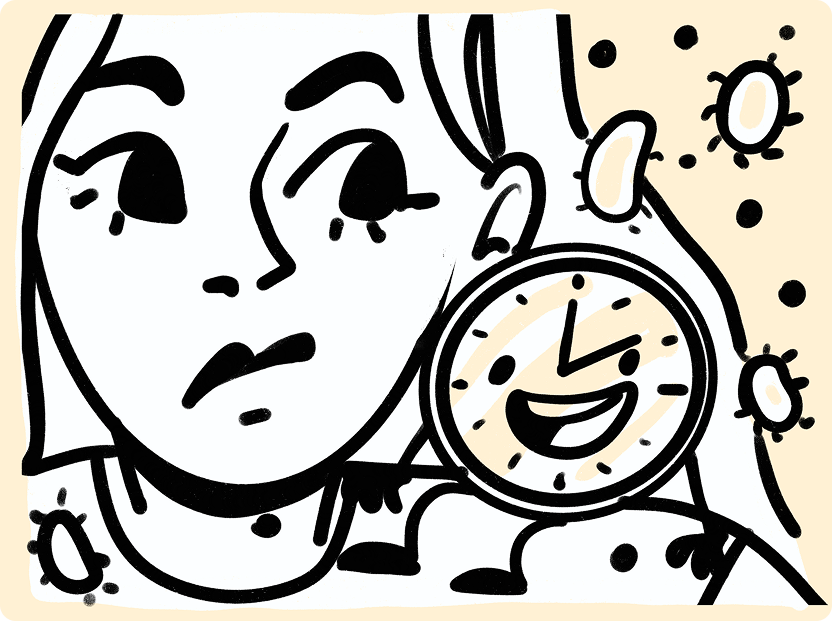
Social viruses don’t cause coughing, but they do infect you with anxiety. Their hallmark is the persistent hum of other people’s metronomes, throwing off your rhythm. Parents hint at grandchildren as though you’re humanity’s last hope against demographic collapse. Social media is full of peers who have already colonized Mars while you’re perfecting the art of procrastination. Society generously hands out life schedules, making you an eternal debtor to someone else’s rules.
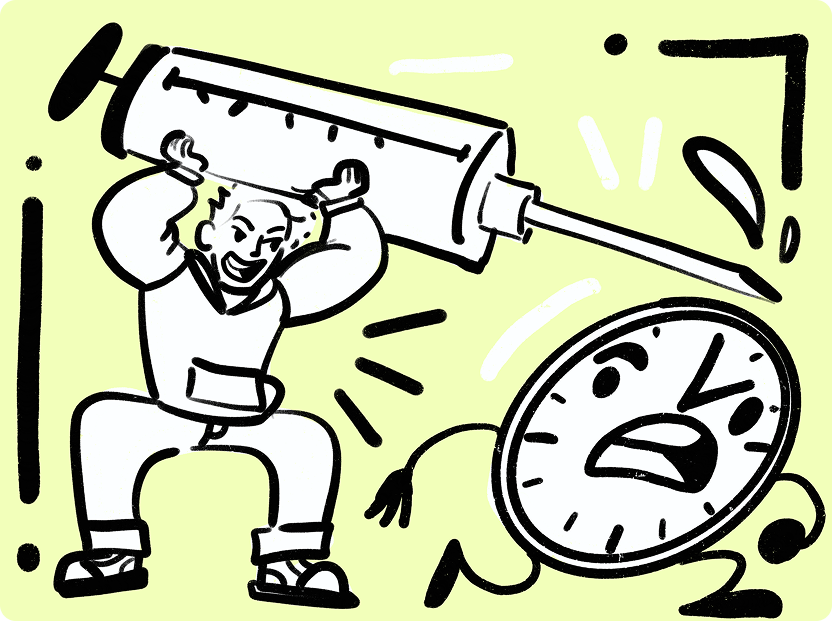
We propose addressing the problem of building antibodies against social viruses like scientists, not victims of an epidemic. We’ve developed a psychological vaccine with dual action designed to preserve your self-esteem. You’ll undergo a two-dose regimen: the “live” serum of life wisdom and the synthetic immunoglobulin of technological solutions. Two injections that last a lifetime and grant you the license to author your own biography.
The injection of the “live” serum is administered. Prepare for a series of controlled explosions that will clear the ground for your new psyche.
1. The Dose of Cognitive Absurdity
If someone tells you, “It’s time to have children, the clock is ticking,” switch into lab technician mode and study paranoia. Carl Jung saw such collective programs as ancient brain patterns inherited from tribes where survival depended on conformity (the urge to “be like everyone else”), but you can break this pattern with absurdity, forcing your brain to rewire.
With an impassive face, ask, “Are you suggesting I should share the ‘child-startup’ model with an 18-year payback period?” Watch as the programmed scenario fades in the other person’s eyes, and a blue screen appears. Instead of an argument, you’re conducting a field experiment, inoculating yourself with sterile cynicism.
2. The Injection of Radical Acceptance
The whisper, “It’s too late to start something new, at your age it looks foolish,” feeds the fear of failure. Kill it with public self-deprecation and sign up for dance classes with seven-year-olds. Your two left feet will become weapons of mass embarrassment. You don’t need to learn how to dance; with a flushed face, perform the “jig” while staring into the eyes of the instructor, who has already buried all your hopes. Catch the moment when your inner perfectionist lets out its death rattle and expires. This is exposure therapy, tested for treating phobias by Joseph Wolpe in the 1950s: you voluntarily dive into fear, and the brain produces antibodies, rendering “shame” a harmless memory.
3. The Drip of Sobriety
When your social media feed tells you that “everyone else has succeeded, and you’re falling behind,” perform an autopsy on others’ ambitions as a pathologist:
- The successful friend buys a third business. Diagnosis: “Panic attack in the form of a sprint away from existential emptiness.”
- The former classmate with three children and the perfect pie. Diagnosis: “Escape into the matrix of approval, terminal stage.”
- An acquaintance changes 10 countries in a year. Diagnosis: “Escape from oneself, route—around the world.”
In psychiatry, this is called “decentration”—a clever perspective shift where you transform from a victim into an observer. Other people’s ambitions float by like clouds, and you simply note “interesting diagnosis.” Suddenly, you realize that behind “normality” is the fear that makes everyone run from emptiness. And your “lateness” emerges as the only sign of mental health.
4. Introduction of the Narrative Serum
Society always knows the plan for your life: “marriage, career, house—and no deviations.” The virus forces you into being a background extra in someone else’s script. It’s time to direct your own epic! Turn your biography from a résumé into a collection of legendary mishaps that people will retell in a bar (preferably long after you’re gone).
Add to your catalog the nightmare dates—like the one where a girl showed up with a checklist and gave you 5/10. Let it also include professional fiascos like “the presentation that received applause out of pity.” And don’t forget the situations that can only be explained by a curse.
Neuroscience calls this reconsolidation: you overwrite memories with humor, so the brain erases fear, turning “too late” into “perfect timing” for your personal triumph. This is the strategy of meaningful, beautiful chaos—the kind where your unpredictable path smells more like real life than the neat distance traveled by the “proper” people.
Phase one of the vaccination is complete. You are now half off-script. It’s more interesting here.
Natural immunity alone is not enough for total victory—you need spy gadgets, digital doping, and a reality simulator. Welcome to the “synthetic immunoglobulin” injection.
Visual Vaccine: The Possible Yous
When the virus insists that your path is wrong, use a visual vaccine. The future must be seen. Stolen. Claimed. Use a neural network to create dozens of images with your face (or something face-like).
Here you are, fulfilling all societal expectations: “45 years old, deputy department head in a major company, glass office, a mug with the company logo on the desk.” Generated. Look at it. Admit it—did you feel a flicker of envy?
Now—freedom. Create a series of portraits where you live by your own rules. For example, the scenario “The Eternal Student”: “50 years old, a lecture hall in an old university on the other side of the world, you’re taking notes in an archaeology class. Your eyes—bright and curious.”
Your AI-twin is a bold rebel already living your dream. Hate the gap between you and them—then give your subconscious a command: “OBTAIN.” This is the Proteus Effect, discovered at Stanford University, where virtual avatars caused people to change their real-world behavior.
Autoimmune Serum
What to do when people tell you time is slipping away and you’re not moving?
Grab your phone and turn the chaos of memories into material proof of your evolution. Create a “Black Box of the Psyche” in a private chat and drop reports with multimedia evidence:
24.10.2025: Fired. Feel like a mountain fell off my shoulders. And shame. Attaching a photo of the shattered company mug.
26.10.2025: Meltdown in the metro. Reason unknown. Voice message with sobs below.
Document everything that happens to you. This materializes your experience. The Zeigarnik effect (the tendency to remember unfinished actions better than completed ones) subsides when a situation is no longer hanging in limbo—it’s packed, documented, archived. In a year, this box will become a Hollywood thriller proving that you weren’t standing still—you were fighting.
Big-Data-Based Immunomodulator
Don’t trust Aunt Lena with her “at your age, it’s too late to jump with a parachute.” Archaic dogmas require cold facts—your fitness tracker or smartwatch becomes a personal detective gathering evidence against your fears.
Aunt Lena: “It’s too late for you to run marathons; you’ll break your bones!” VS Your smartwatch: “VO₂ max—45 ml/kg/min, equivalent to a 25-year-old athlete. Biological age: 28. Chronological age: 38.”
Build a fortress of metrics against outdated beliefs: DNA tests, sleep trackers, calorie and stress monitors. Your body is a set of objective data, and right now it’s shouting: “STILL EARLY!”
Training T-Lymphocyte in AI Form
If you’re told it’s too late to take risks or radically change your life, it means you must rehearse your takeoff. Courage is a neural pathway that can be programmed. Play out the apocalypse scene in a safe environment.
Send this request to a neural network:
“I’m a burned-out IT specialist dreaming of flying to Thailand to become a snowboarder. You’re my 55-year-old boss, a conservative who believes life = office + mortgage. Start a tough conversation about my resignation.”
AI responds, and you’re in: testing tactics from diplomacy to rebellion.
10, 20, 50 rounds! It’s a safe testing ground where your brain practices patterns and adapts to stress (Harvard studies show simulations reduce anxiety by 50%). When you enter the real ring, your neurons won’t flinch—they already know the script by heart. You’ve won the battle in the matrix; now go collect your prize offline.
Vaccination is complete. Your consciousness is now enhanced with a digital interface, armed with data, and trained in virtual arenas. Side effects may include: a sense of freedom, heightened awareness, healthy indifference toward other people’s timelines.
Congratulations on your discharge.
No “it’s time” or “too late” virus can reach you now.
Your inner ecosystem now produces only healthy meanings.
Good luck!
While living organisms undergo translocation, deletion, and duplication, we offer scientific knowledge without mutations – only useful discoveries and theories.
Thank you!