Category: Materialization technologies
Can You Catch Old Age?
“Age is a matter of mind over matter. If you don’t mind, it doesn’t matter”
Mark Twain
A gentleman of elegant years is passing the day in line to see a doctor, compiling folklore to entertain himself later on a park bench. Meanwhile, his peer is getting banned in a meme public forum for comments that could trigger a creative crisis for the writers of Attack on Titan. They seem like representatives of different biological species. And it’s not about the genes, which we love to blame for everything—from the first gray hair to procrastination before the gym.
The “aging program” is a pattern passed down by the people around us, who relentlessly, with determination that would be better used elsewhere, repeat “that’s how it’s supposed to be.” Research in epigenetics confirms that our habits and social circle can switch on and off genes related to aging. Just think: you can catch it from a yawn, from the phrase “in our time,” and from a collective sigh when looking at the youth! Is it possible to avoid this? Absolutely. Let’s break down the mechanism.
How the ‘Old Souls’ Pass On Your Brain’s Routine Program
The brain is a sly diplomat, always ready to adopt someone else’s behavior model to save energy. This ability once helped us acquire useful skills for survival, but now it makes us adopt other people’s limitations. If your environment declares that a sanatorium is the pinnacle of ambition and speaks with the breath of morticians, saying “oh, these kids with their phones,” your brain, ever the sycophant, immediately adjusts. It enthusiastically shuts down the creativity section and switches to “couch strategist” mode: any action that requires changing from slippers to shoes feels like a personal offense.
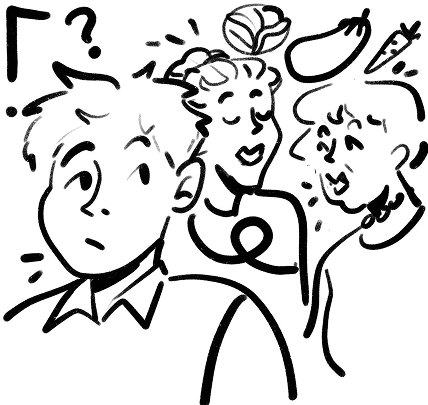
Conduct an experiment (either mental or, if you’re daring, real): have lunch with colleagues who discuss zucchini prices as if they were in an episode of Game of Thrones. After that, even the thought of an evening jog will seem absurd, and a quest in the park will seem like pure exoticism. You’ll feel how, through this verbal fog, you’ve absorbed the aging program. And before long, you’ll be the one telling someone else about the rising cost of grains, with the same sparkle in your eye. The genius of this contagion lies in the fact that it disguises itself as “common sense.” We’re not lazy, oh no. We’re “reasonable.”
The Trojan Horse Called “I’m Too Old For This”
This horse is especially treacherous when you invite it in with applause from society: the phrase “I’m too old for this” signals surrender to the collective hypnosis. Say it, and you’ll hear a switch click somewhere inside. That’s how a stable neural connection forms, literally allowing the mind to stop evolving.
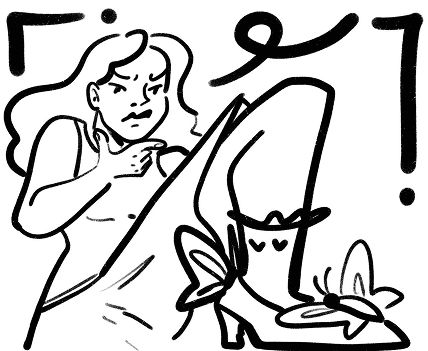
Every time you mumble that you’re too old for dancing, a career, or a bright scarf, the program triumphs: no energy spent on novelty! In return, it feeds you dopamine from scrolling through social media—fast food for the soul. You make a pact with this inner parasite, and it generously offers an alibi: “age, what can you do?”
Wait. Have you checked your passport lately? There’s no section that bans fun or adventure. That clichéd limitation was a gift someone gave you. And it’s not a very good gift.
While we diligently save energy, our body finds yet another way to hasten the twilight—through the cult of constant worry.
Stress Is An Accessory for Growth
Many people wear chronic stress like a designer handbag — conspicuously and with a hint of their incredible busyness. But it’s just a trendy way to accelerate your own aging. Cortisol is like a mischievous imp in the brain, blaring its siren at the sight of a broken plate, as if a meteor had just fallen. Under its accompaniment, telomeres (the protective caps at the ends of chromosomes) shorten, as if they were being trimmed by an invisible and very hasty hairdresser. Harvard scientists found that women who live in constant tension have these “wicks of youth” burning up ten years faster.
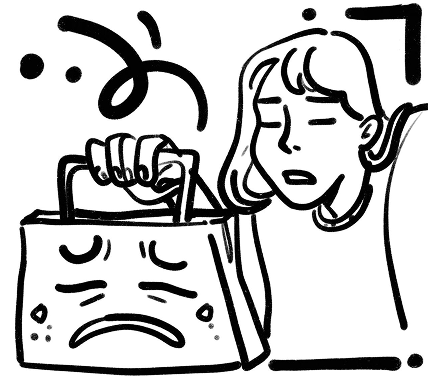
The worst is the group version: people compete to see who is more tired, as if they were vying for a ticket to a paradise resort for the most exhausted. And the grand prize? Early retirement due to health reasons. Listening to such a champion, you’ll immediately begin to feel anxiety eating you from the inside, and, quite literally, you’ll become shorter on a molecular level. And the funniest part is: we voluntarily create this cellular apocalypse for ourselves, proudly calling it “responsibility.”
Social Hypnosis: How We Are Imposed with Old Age Under the Guise of “Norm”
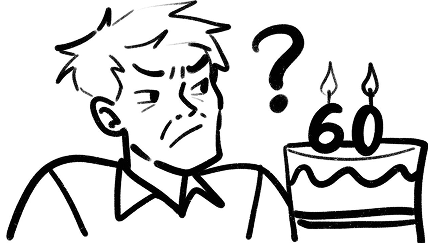
But what if you’ve avoided both laziness and stress, yet the feeling of “it’s time to rest” still creeps in when you hit 60? These are the seeds planted many years ago. You’ve known since childhood that old people must limp, complain about the weather, and lose their keys. These stereotypes echo in jokes, movies, and your aunt’s endless sighs about her ailments. You’ve always been taught that this is the “normal life cycle.”
And your body obediently plays this role, like an actor who has truly believed in their character. The classic experiment by psychologists Beck and Emslie confirmed this: when elderly people were placed in a retro environment that reminded them of their youth, their bodies literally turned back the clock — their memory, agility, and even blood pressure improved. The scientists were stunned: it turned out that people who believed in the myth of the “feeble old man” ended up becoming that very stereotype! This is pure self-hypnosis, embodying the infected scenario.
Youth Saboteurs, or People Who Annoy Everyone
Now let’s talk about those who refused to age. Scientists have studied “super-agers” (elderly people with young minds) and residents of “blue zones” (regions where longevity is the norm). In these unique areas, from Okinawa to Sardinia, long-lifers actively work in gardens, participate in social life, and — most surprisingly — feel indispensable. Their neurons in old age are cleaner and stronger than those of many in their prime. What sets them apart? A healthy, bold rejection of the general rules.
Instead of stewing in the same pot with their peers who are constantly aching, they constantly throw their brains explosive doses of novelty. They’ll join a stream with their grandchild to argue about AI, start learning Japanese to read manga in its original form, or begin a podcast on quantum physics for five listeners. Their brain is thrilled with this chaos! It’s like a puppy, joyfully building new neural connections just to keep up with its owner.
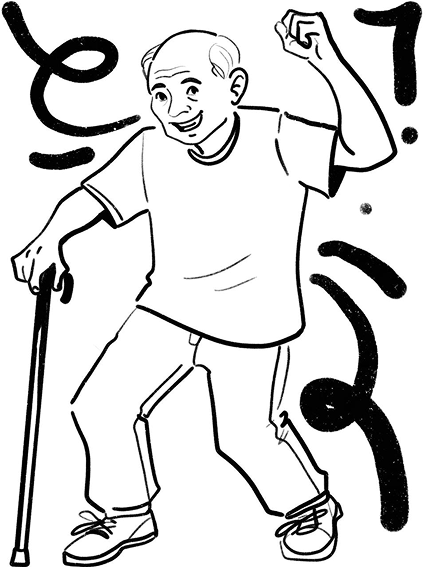
And the most important thing — they have “ikigai,” a Japanese sense of purpose. It’s a concrete reason to shape the day and bring joy and benefit to others. While their peers plan retirement as the final act, they wake up with the question: “What shall I do today?” They bake cakes for the entire building or compete to grow the most hideous vegetable. All these activities root out cortisol, turning stress into reactive fuel.
Super-agers have rejected the collective program, and that’s their main secret. If you let your brain become a grumpy old man, it will surrender to time without a fight. But if you infect it with boldness and curiosity, it will help you reclaim decades full of wonder and laughter.
The Choice is Yours: Submit or Reboot the Matrix
Let’s face it: we’ve all been signed up for the game called “Life” and given instructions on how to assemble our identity. We have the right to perceive age as a conditional parameter that we can either submit to or not. Look around: some people at 60 go hiking, while others at 25 set up a cozy nest made of blankets and TV shows. Both are right.
In the end, whether you catch the “age” virus or not is entirely your choice. If the company around you, which spends its evenings knitting socks, weighs you down, run away from it. Create your own tribe from those who, at any age, skateboard or learn something new every day. Allow yourself to create, and then age will become the epic backdrop for your adventures. After all, why age, when with each passing year, you can become even more interesting?
Your thought is a big bang of ideas. Our journal is its source.
Thank you!